Event 1
Flynne Fisher takes over Burton’s security shifts
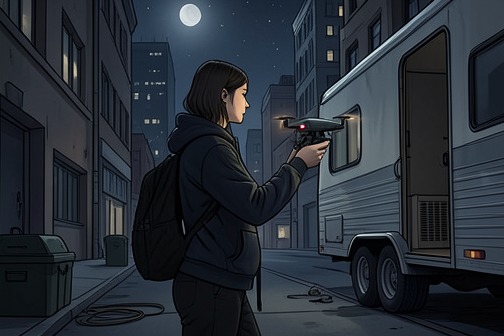
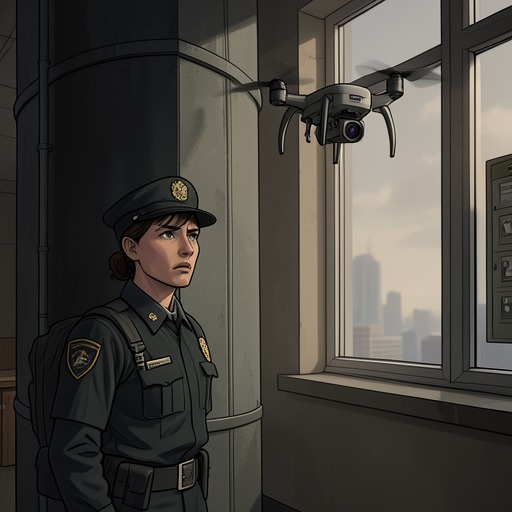
[Flynne Fisher](entity:character-recall-character-flynne-fisher-554d3bcb279f) takes over [Burton Fisher](entity:character-recall-character-burton-fisher-69e279c92a18)’s [Milagros Coldiron](entity:organization-recall-organization-milagros-coldiro-850210f40670) security shifts when Burton asks her to fly a quadcopter for five hours. The work is advertised to her as a beta game, but its real purpose is perimeter security around a [London](entity:location-recall-location-london-420923d4a60a) tower: she is to keep paparazzi away from three floors and, in doing so, enters a remote environment whose unfamiliar city and mechanisms exceed the explanation she has been given. What begins as a well-paid substitute shift becomes [Flynne](entity:character-recall-character-flynne-2b508811bbfe)’s practical threshold into another time and another kind of embodiment.
## The Assignment and Its Cover Story
Burton presents the shift as a straightforward favor, asking Flynne to sub for him and fly a quadcopter. When she points out that he is on disability and should not be working, he offers little explanation. His account is deliberately thin: it is a game, he says, though the work is for a security firm. The contradiction is sharpened by the money. Ten thousand dollars will go into Flynne’s pocket, and Burton says he has been doing the job for two weeks, with Sundays off.
The assignment’s actual task sounds almost mundane. Flynne is to work a perimeter around the fifty-fifth, fifty-sixth, and fifty-seventh floors of a tower, watching for paparazzi and edging them back. She is not supposed to shoot anyone or confront a conventional threat. The instructions make security sound like a low-stakes game of boundary keeping, but they do not prepare her for the unfamiliar city, the remote viewpoint, or the urgency of the voices she will hear once connected.
## First Login: A Viewpoint Without Control
At home, Flynne bends her phone to the angle she prefers for gaming, enters HaptRec, and presses GO. The display flashes silver, and she finds herself rising out of what Burton has described as a launch bay on the roof of a van. She has no control yet. Around her are faint, urgent whispers, like dispatchers speaking from a source she cannot see or understand.
The view itself confirms that the assignment is not an ordinary game. Rainy light lies over a dark city; a river appears cold and metallic, and distant towers rise above the streets. Looking down, Flynne sees the van shrink below her; looking up, she sees the tower stretch away like a cliff. This sudden change in scale makes the remote perspective vivid before she has the means to direct it. She has entered the job, but not yet mastered the interface.
## Learning the Perimeter
On a later shift, Flynne plans what to inspect as she goes up. The launch vehicle now looks less like a van than an armored car, with a square, dark bay from which the copter emerges. She tries to follow the aircraft upward, but cannot make it rise more quickly and loses sight of it. The experience gives her a working problem rather than a complete explanation: she can observe, test, and infer, but the system retains control over parts of her movement.
At the fifty-sixth floor she finds a balcony folded down behind frosted glass. She guesses that she has missed the party and waits by the window, hoping to learn something about what happened there. No bugs appear, and the mechanism that had carried her upward like an elevator is gone. After waiting, she checks the perimeter again and notices a grate steaming on the far side. The search produces no clear answer, but it changes the shift from a simple patrol into an investigation conducted through limited access and incomplete sight.
Flynne’s local circumstances intrude on this distant work. While checking Badger, she sees that Burton is off the map and determines that he is at the [Hefty Mart](entity:location-recall-location-hefty-mart-b754358a2f2b) parking lot in [Davisville](entity:location-recall-location-davisville-2acce32d9b05), where she guesses [Homeland Security](entity:organization-recall-organization-homeland-securit-293e143b4b5e) trucks may be holding his phone. She understands that [Homes](entity:organization-recall-organization-homes-99432227f05b) can see she has made the check and worries instead about whether anyone will notice that her phone is unusual. The remote assignment therefore sits alongside surveillance and uncertainty at home; the two environments are connected by the same device, even as Flynne has only partial knowledge of what each connection exposes.
## A Tool That Means Different Things
The language around Flynne’s work repeatedly understates what it enables. Burton calls it a game, and Flynne initially thinks of the phone as a game controller; later she objects when someone describes the interface in those terms. The correction is that it is a telepresent interface, one that can work without hands. In another exchange, a piece of hardware is discussed as something to be arranged and paid for, though the speaker says they would not know how to explain what it does. Across these descriptions, the technology appears not as one stable object with one shared meaning, but as equipment various people can use without fully describing or understanding it.
That uncertainty becomes concrete when Flynne accesses an anthropomorphic drone. She wakes to hands that are not her own and sees a face unlike hers reflected in a steel canister. [Ash](entity:character-recall-character-ash-4997dc421b44) explains that Flynne is receiving input from a telepresence avatar, and tells her not to consciously control it while it is being recalibrated. [Macon](entity:character-recall-character-macon-21dea3de81f7)’s device is imperfect, but it works. The shift from the aerial copter to a human-shaped remote body makes the stakes of the earlier interface clearer: remote access can extend beyond observation and become an embodied presence, while leaving the user to catch up with what the system has already made possible.
## Consequences and Significance
Flynne’s substitute work does not end with the discovery of the tower’s perimeter. She is later told she is there to help Burton, and, by implication, to help the person addressing her too, although Jackman had not mentioned her. The assignment has drawn her into a chain of responsibilities that reaches beyond the narrow job description Burton supplied. Its five-hour shifts begin as paid security work; their consequences include her growing involvement with people and equipment whose purposes are not fully disclosed to her.
The event’s importance lies in the gap between the familiar terms and the strange labor they conceal. A phone, a game login, a quadcopter, and a promised wage form the ordinary surface of the job. Underneath is a remote viewpoint over another London, a tower whose upper floors hold an unexplained gathering, and technology that can place Flynne in an unfamiliar body. The work makes the future accessible through an everyday task, but never wholly legible: Flynne learns by looking, waiting, and testing the boundaries of a system that can act before she understands it.
Event 2
Aelita West在stub中的遇害

[Aelita West](entity:character-recall-character-aelita-west-1c5629bc3002)’s killing in the [Stub](entity:concept-recall-concept-stub-ecededb2e825) is the moment [Flynne Fisher](entity:character-recall-character-flynne-fisher-554d3bcb279f)’s remote observation becomes an encounter with a real murder. While piloting a surveillance copter in a future [London](entity:location-recall-location-london-420923d4a60a), [Flynne](entity:character-recall-character-flynne-2b508811bbfe) sees a man and a woman on a balcony, then watches a bronze-black device attack them. The woman dies, and Flynne later identifies her as [Aelita](entity:character-recall-character-aelita-242d2c280053) from a photograph. The killing overturns the assumption that the distant world is merely a game and becomes the central fact behind Flynne’s subsequent account and investigation.
## Causes and Background
Flynne sees the attack during a shift spent operating a remotely controlled copter from the hot darkness of a trailer. The target building’s exterior offers little warning: amid flat squares and rectangles filmed over with condensation, the bronze-black object stands out as perfectly dry. It changes shape, becoming flat and angular, with its twisting legs turned into brackets. Its position is centered above the fold-out balcony one floor below.
The woman and a man are at the railing, facing the river. In Flynne’s later account, the man is in his early thirties, with dark hair and some beard, and wears a brown bathrobe. The woman is beside him, with his arm around her; because she cannot see his face, she does not know what he knows. Flynne recognizes, in retrospect, that he understands she is about to be killed. The man’s apparent intimacy with the woman thus sits alongside his foreknowledge of the attack.
## The Attack
As Flynne moves closer to get an image, the device opens along a narrow vertical seam and ejects something too small to see clearly. It strikes at the copter’s forward camera in a rapid series, damaging the image and threatening to blind the surveillance feed. Flynne pulls back, drops three floors, and lets the gyros catch the copter; the attacker appears to have disappeared. She then moves left and rises again, continuing to watch from above.
The man takes the woman’s hands and covers her eyes. He kisses her ear and says something Flynne cannot hear; she later guesses that he said “Surprise.” He turns toward the building, apparently expecting what comes next. When the device splits open again, more of the tiny attackers emerge. The man looks up and sees the copter, but does not stop or turn back. Flynne tries to ram his head with the copter; he ducks and catches himself on his hands, then quickly gets inside. The door vanishes behind him as the opening becomes a smooth, polarized sheet of glass.
The woman turns after the man’s movement and opens her mouth. One attacker enters, and she freezes. More follow. As the attackers continue their assault, the balcony railing retracts and the woman falls backward. Flynne follows her downward in the copter, but cannot save her. By the time the falling figure reaches the thirty-seventh floor, where Flynne had first noticed the device, the woman’s clothing is all that remains visible. Flynne pulls up before the twentieth floor and hangs in the copter’s slack, overwhelmed by sorrow and disgust.
## Identification and Aftermath
Flynne’s first telling establishes what she saw but not the victim’s identity. Later, she explains that she had seen the same woman before, at a party, and then again after the party had ended, in different surroundings. During the later encounter the woman was in pajamas, with another person present whom Flynne could not see. At the balcony, Flynne could see the woman and the man, but could not read the man’s expression from the woman’s position beside him.
When [Wilf Netherton](entity:character-recall-character-wilf-netherton-53b99127730d) shows Flynne a matte print of a headshot from Aelita’s website, Flynne recognizes the woman and nods. The image is from more than seventy years before Wilf’s world, in a past that no longer quite matches the history that produced it. The identification connects the attack to Aelita West and turns Flynne’s disturbing visual memory into evidence relevant to the investigation.
## Significance
The attack hinges on the gap between what Flynne can observe and what she can prevent. She can move the copter, change altitude, and attempt to intervene, but the attackers can damage its camera, and the man’s knowledge gives him time to escape while the woman remains exposed. Remote access grants Flynne a view of the scene without giving her the power to stop it.
That imbalance also breaks the protective distance of play. In the trailer, after witnessing the woman’s death, Flynne says, “Just a game,” but the phrase cannot contain what she has seen. The victim’s later identification as Aelita confirms that the scene was not an anonymous simulation or a harmless spectacle. It was a killing in the Stub, observed from afar and carried forward into Flynne’s dealings with Wilf and the investigation of Aelita’s fate.
Event 3
垃圾带会面中的哈米德·哈比卜遇刺

The assassination of [Hamed al-Habib](entity:character-recall-character-hamed-al-habib-42ea52d72e1c) unfolds during [Daedra West](entity:character-recall-character-daedra-west-a222db6082ed)’s meeting with the patchers, on their immense floating sculpture in the [Great Pacific Garbage Patch](entity:location-recall-location-great-pacific-garbag-d4fd7f569657). The encounter turns from a personal confrontation into a lethal attack by an American weapons system: the patcher leader dies, the surrounding group is struck, and Daedra disappears from view during an extraction that is deliberately withheld from observers. The incident brings the patchers’ fragile, little-understood community into sudden contact with state violence, while leaving the identity of the person killed and the political meaning of the attack to emerge only afterward.
## Setting and Background
The encounter takes place on a structure the patchers inhabit and the curators describe not as a city but as an incremental sculpture, or a ritual object. Made from suspended particulates recovered from the upper water column of the Great Pacific Garbage Patch, it weighs an estimated three million tons and remains afloat on segmented bladders, each as large as a major airport of the previous century. Fewer than a hundred inhabitants are known, and the structure’s continual assembly—and apparent consumption of cameras—makes the patchers difficult to observe.
The meeting is watched remotely by [Wilf Netherton](entity:character-recall-character-wilf-netherton-53b99127730d) and others through camera feeds. Daedra approaches by parafoil, which changes shape as it slows her descent; she lands on the translucent surface and runs toward the circle of small figures. The mediated viewpoint matters to the event: observers can follow the approach and the confrontation, but their access is partial, and the later extraction is blanked from the feed.
## The Confrontation
As Daedra reaches the gathering, she begins unzipping her jumpsuit, but the zipper jams. The patcher leader seizes her wrist and lifts her from the ground. Daedra kicks him and makes contact with his side; then she plants both feet against his stomach and pushes away. In the movement, she withdraws one of her unusually long nails. The leader releases her, falls forward, and dies. Daedra is back on her feet as the confrontation changes abruptly in scale.
An unfamiliar voice on [Clarisse Rainey](entity:character-recall-character-clarisse-rainey-ac40b2407a58)’s feed announces an incoming hypersonic attack and its deceleration and shockwave. Six white vertical cylinders appear above and just outside the circle. [The patchers](entity:character-recall-character-the-patchers-23853d60f6e4) have dropped their bikes and scooters and begun moving toward Daedra when the attack strikes; they are thrown and killed. One camera freezes on the image of a severed hand. The watchers have no time to make sense of the weapon before the destruction is visible across the feeds.
[Rainey](entity:character-recall-character-rainey-a87209cf2f8f) responds with astonishment that the situation is disastrous. Netherton sees a Michikoid on the deck of the moby sprout multiple spider-eyes and muzzle-slits before vaulting the railing. The attack thus coincides with a rapid military response, but the watching characters cannot establish what the Michikoid will do next or what has become of Daedra.
## Extraction and Immediate Aftermath
Later, Netherton asks where Daedra is. Rainey tells him that Daedra’s government sent in an aircraft, blanked the extraction from observation, and ordered the moby away. The watchers have not seen the removal itself; they know only what their remaining feeds showed. The large patcher is down, the others were killed, and no additional patchers appeared, so there were no further casualties visible to the observers. Rainey describes that outcome as favorable only in theory, conditional on the project continuing.
The event therefore ends in an informational gap as much as in physical destruction. The meeting’s observers can report the deaths and the government’s intervention, but they cannot see Daedra’s extraction or confirm what follows for her. That gap prevents the attack from resolving the broader question of the project’s future.
## Identification and Political Meaning
The leader’s name is not initially known to Netherton. Later, [Ainsley Lowbeer](entity:character-recall-character-ainsley-lowbeer-41b557365a63) tells him that he and his former associate Rainey witnessed the recent killing of Hamed al-Habib by an American attack system. Netherton’s surprise that the patcher leader had a name underscores how little the distant observers understood the people they watched. [Lowbeer](entity:character-recall-character-lowbeer-e57df8106927) confirms that Hamed al-Habib is his name, though it is not widely known.
Rainey reports that the United States and a faction in the New Zealand government are implicated in what they hear described as an assassination; Netherton calls that characterization absurd, while acknowledging that it is what is being reported. Lowbeer’s later account supplies a firmer identification of the victim and the weapon than the immediate scene did, but the provided account does not establish the attack’s full chain of command or motive. The event’s political significance rests in that tension: a remote, lethal state action is witnessed through surveillance, its extraction concealed, and its victim named only afterward.
## Narrative Significance
The attack compresses two kinds of violence into one watched encounter. Daedra’s struggle with the patcher leader is close and personal; the hypersonic strike is distant, technologically mediated, and directed at the gathering as a whole. The camera feeds make the violence visible without making it fully knowable: they preserve the approach and the killings, then fail at the moment when Daedra is removed and responsibility becomes a political question.
The surrounding context sharpens the contrast between spectacular action and slower catastrophe. Netherton later explains that the Jackpot in his world was not a single apocalyptic event, but a multicausal crisis unfolding over decades: climate change, drought, water shortages, crop failures, ecological collapse, and disease together killed most of the population. That account also describes assemblers later cleaning and maintaining a changed [London](entity:location-recall-location-london-420923d4a60a), while the surviving wealthy benefited from the conditions the disaster created. Against this long, dispersed history of damage, Hamed al-Habib’s killing is immediate and legible as an attack—yet the wider systems that make such violence possible remain only partly visible.
Event 4
针对Burton Fisher的刺杀合约
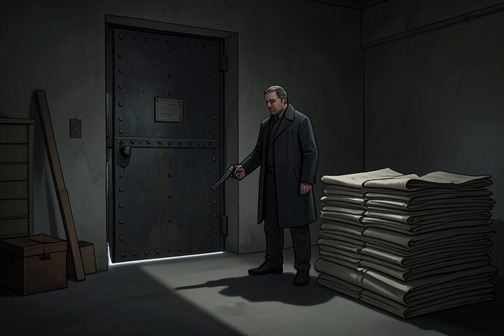
The assassination contract against [Burton Fisher](entity:character-recall-character-burton-fisher-69e279c92a18) begins as an anonymous eight-million offer on a darknet market for criminal services, but its importance lies beyond the prospect of violence: it shows that information can travel from a historical stub into the future and make a man in that past a target. Once warned, Burton refuses to treat the danger as his alone. He uses the threat to demand protection for his sister and compensation for his injured cousin, converting an opaque contract into a negotiation over his family’s safety.
## The Advertisement and Its Uncertain Auftrag
The investigators encounter an advertisement seeking someone willing to undertake an unspecified task, which [Ash](entity:character-recall-character-ash-4997dc421b44) judges likely to involve violence. Its placement on a darknet board marks it as a solicitation within a market for criminal services. The sum offered—eight million—is large enough for murder to be the working assumption, but not so unusual for that board that it would necessarily attract informers or agents monitoring it. It is also not so small that it would be likely to draw only amateurs. Someone applies almost immediately, and the advertisement is then removed.
The offer’s apparent clarity conceals the central uncertainty: neither its target nor its sponsor is initially known. The investigators can access the stub’s networks, but access does not make every message intelligible. Lev explains that traditional encryption remains effective; even his family’s security could probably manage it, though his family knows nothing of the investigation. The contract thus presents the future with a visible threat and an obscured chain of responsibility: the investigators can see that someone is hiring, but not who is behind the message or what information the intended victim is believed to hold.
## Burton Is Identified as the Target
Ash connects the advertisement to Burton by displaying his image and explaining that the visitors have hired someone to find him, whom [Ossian](entity:character-recall-character-ossian-4b574fa868e0) assumes they intend to kill. The identification creates a temporal puzzle. Burton is a person in the stub, a past that the future’s investigators have treated as effectively nonexistent; to them, his life cannot directly alter their own world. Netherton therefore asks why anyone would want to kill a man in that past.
Lev’s answer supplies the contract’s consequential logic: information flows both ways. Although events in the stub do not ordinarily affect the future in the direct, material sense the investigators first consider, knowledge from the stub can cross the boundary. Someone must believe Burton knows something that, if available in the future, would endanger them. Ash offers a more specific possibility: Burton may be a witness. Her attempts to reach him by phone and message have gone unanswered, leaving the suspected target both identified and, for the moment, inaccessible.
The danger is further complicated by the timing. Burton had been on duty during [Aelita](entity:character-recall-character-aelita-242d2c280053)’s reception, but Ash corrects the chronology: the event being investigated is estimated to have occurred the evening after the reception, when Burton would have gone on duty. His possible connection is therefore not established as a witnessed fact; it remains a lead inferred from timing and the contract. The distinction matters. The investigators do not know that he possesses decisive evidence, only that someone may believe he does.
## Burton Turns the Threat into Leverage
Lev eventually tells Burton about the advertisement during a call. Burton is returning home from visiting his injured cousin and has not yet spoken to his sister; Lev advises him to wait until he can speak with her in person. Burton then makes clear that the prospect of being targeted does not exhaust the problem. He considers himself difficult to attack and says he has resources for a situation of that kind, but the possibility that his sister might also be a target is unacceptable. He asks Lev what he intends to do about it.
Lev initially offers money so Burton can hire protection. Burton does not accept an open-ended promise: he wants to speak with his sister and to hear a specific sum. The exchange shifts the balance between the parties. Lev is trying to provide reassurance, while Burton makes the discussion concrete and conditions further cooperation on a definite offer. Netherton, listening to the call, recognizes that Burton has taken control of the negotiation. Lev’s knowledge of the future and access to money do not make him the more capable strategist in this conversation.
Lev names ten million, slightly more than the eight-million murder offer. Burton objects that his cousin cannot receive that much through [Hefty](entity:organization-recall-organization-hefty-2ea160e4f5bd) Pal. Lev responds that the cousin can instead win the amount in the state’s next lottery, making the payment entirely legitimate. The proposed payment is thus not simply protection money: it is a way to direct substantial financial help to Burton’s injured cousin through a lawful-looking channel. The available evidence establishes the offer and its proposed mechanism, not whether the lottery win subsequently occurs.
## Consequences and Narrative Significance
The contract binds together criminal hiring, cross-temporal knowledge, family obligation, and financial intervention. At first, the future investigators see a murder offer aimed at a man whose past seems unable to touch their present. Burton’s response reveals that the immediate stakes are not limited to whether he can defend himself: his sister’s possible exposure, his cousin’s injury, and the terms of cooperation all enter the same negotiation. The threat acquires a family scale, while Burton converts the distant power of the future into a specific promise of money.
The episode also unsettles the division between observer and participant. The investigators can access the stub’s networks and discuss its long-term outcomes, yet they cannot freely translate that access into certainty. Encryption frustrates them; Burton’s identity as the likely target is an inference; and the reason for the contract remains a belief about information that might endanger someone in the future. The advertisement is therefore both an attempted act of violence and a clue whose meaning depends on the two-way movement of information across time.
Netherton’s private interpretation of the proposed lottery payment as potentially Faustian underscores the cost of intervention without establishing an explicit bargain or supernatural consequence. Lev does not understand the allusion, and the call ends without resolving the larger mystery: who placed the advertisement, what Burton might know, and whether the promised money will be delivered. What does change is the immediate relation of power. Burton is no longer merely the man identified in someone else’s contract; he is an active negotiator who sets terms around his family’s safety.
Event 5
Porter Road四名持枪男子被杀
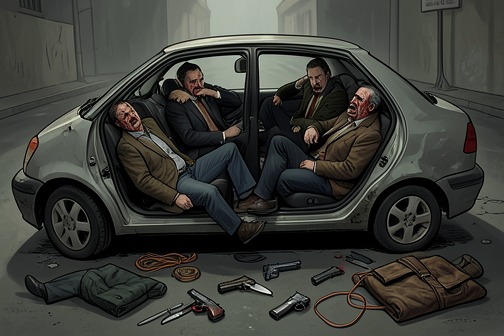
Four armed men are found dead in a stolen car on [Porter Road](entity:location-recall-location-porter-road-b8724bb7921e), in a killing whose puzzling circumstances connect Burton’s security work, [Conner](entity:character-recall-character-conner-981da0e99ab6)’s combat methods, and [Corbell Pickett](entity:character-recall-character-corbell-pickett-7aaa9e78709b)’s influence over local law enforcement. What begins as a county deputy’s request to identify the victims becomes evidence of both an attack prepared in advance and a system in which money can redirect the authorities’ attention.
## Discovery and the Scene
The case reaches Burton when Deputy [Tommy Constantine](entity:character-recall-character-tommy-constantine-7e32d6b2987b) asks him to look at four bodies found on Porter Road, reasoning that the men might be connected to the area where Burton lives. [Flynne](entity:character-recall-character-flynne-2b508811bbfe) wakes to the conversation and hears [Tommy](entity:character-recall-character-tommy-6e67d140947b) describe a multiple homicide, assassination-style, roughly halfway between the family’s home and town. The car had been stolen the previous day, and the men had travelled from outside the county.
The victims carried two pistols, a new set of steak knives, and zip ties; they had no identification. Their equipment suggested preparation to kill someone, rather than an ordinary journey. All four had been shot in the head with what Tommy believed to be a .22-caliber weapon. The bullets had not exited, so investigators expected to recover them.
The arrangement of the shots made the deaths especially difficult to explain. The driver had been shot through the windshield, a passenger through the window beside him, and the two men in the back through separate windows. The apparent sequence was someone moving around the car and shooting each man in turn. Yet two victims still held pistols, raising the question of why they had not fired back. At the roadside, investigators also considered whether a vehicle had forced the car into a ditch before the occupants were shot; faint tracks collected from particulate matter appeared possibly to have come from a three-wheeled vehicle.
## Identification and Competing Explanations
The men’s identities sharpened the case without resolving its central mystery. Investigators found no identification on them, but prints later linked all four to Nashville and to extensive criminal histories. A deputy described them as muscle for local drug builders, with records including serious assaults and suspicions of homicide that had not resulted in convictions. Their background supported the possibility that they had been sent to kill someone, but it did not establish who had hired them or who killed them.
At the scene, investigator Jeffers outlined a possible ambush: the car may have been forced off the road, the driver shot first, and the others killed before they could respond. The faint, borderline evidence of three-wheel tracks offered one possible lead, not a conclusion. The authorities’ early account therefore remained provisional, built from the stolen car, the weapons and restraints, the occupants’ apparent readiness for violence, and a pattern of shots fired from outside the vehicle.
## The Possible Perpetrator and Combat Method
Flynne later connected the killings to Conner, reasoning that he had killed the four men on his first night working with Burton. The scene’s unanswered tactical question—why two armed men had not shot back—thus acquires a possible explanation in the gap between preparation and response: the attackers’ weapons and restraints indicated intent, but the killing was carried out before the occupants could use their pistols. Flynne understood Conner’s approach through the [Haptic Recon](entity:rule-recall-rule-haptic-recon-1e0baaaf014c) ethos of [speed, intensity, and violence of action](entity:expression-recall-expression-speed-intensity-an-07ce8693db05): act hard and fast even when intelligence, planning, or equipment is imperfect. The account links that doctrine to the deaths without turning the investigators’ uncertain reconstruction into a confirmed description of exactly how Conner killed them.
## Connection to the County’s Political Economy
The killing also becomes a matter of local power rather than crime-scene evidence alone. [Janice](entity:character-recall-character-janice-d86fff714ef3) tells Flynne that Burton paid Corbell Pickett to make the four men on Porter Road “get ’em lost track of.” The bodies might soon have drawn little attention in the county, but state investigators could pursue the case longer; Pickett, Janice explains, had enough influence at the statehouse to shorten that attention for a price. The payment does not identify who killed the men, but it shows how their deaths could be absorbed into a system of purchased quiet.
## The Deaths in the Wider Security Landscape
The four killings later serve as a point of comparison when Burton’s security work becomes entangled with larger institutional forces. [Macon](entity:character-recall-character-macon-21dea3de81f7) warns Flynne that the people behind their layered corporate structure may soon face a challenge: if the danger consists of unemployed veterans, Burton might be able to handle it, but an intervention by state police, [Homes](entity:organization-recall-organization-homes-99432227f05b), another federal agency, or the Marines would make a direct fight futile. The contrast places the Porter Road episode within a world where private force can be effective locally, while state and federal power operates on a different scale.
The possible arrival of Homes gives that contrast a concrete political edge. Macon notes that the agency has appeared at Pickett’s property for the first time, after an explosion drew its attention to a site that had long looked more like an industrial operation than a home. Later, reports describe large Homes convoys heading toward the Fisher property, while a sizeable detachment remains at what is left of Pickett’s. Its stated purpose is to clear the armed remnants of Pickett’s drug empire, though the account credits Burton, his friend, and Conner’s Veterans Affairs prosthesis with having already stopped that organization. The Porter Road deaths thus belong to a sequence in which the question of who can exercise force—and whose account of that force becomes official—keeps shifting.
## Connection to the County’s Political Economy
The killings also become a matter of local power rather than crime-scene evidence alone. Janice tells Flynne that Burton paid Corbell Pickett to make the four men on Porter Road “get ’em lost track of.” The bodies might soon have drawn little attention in the county, but state investigators could pursue the case longer; Pickett, Janice explains, had enough influence at the statehouse to shorten that attention for a price. The payment does not identify who killed the men, but it shows how their deaths could be absorbed into a system of purchased quiet.
That arrangement reflects the county’s wider dependence on Pickett. Janice explains that residents had kept his name from Flynne, while his influence and share of the local drug economy remained embedded in everyday life. The effort to divert scrutiny from the four dead men is therefore not simply an informal favor: it reveals how criminal violence, money, and political access could shape what law enforcement pursued.
## Connection to the County’s Political Economy
The killings also became a matter of local power rather than crime-scene evidence alone. Janice told Flynne that Burton paid Corbell Pickett to make the four men on Porter Road “get ’em lost track of.” Their deaths might soon have drawn little attention in the county, but state investigators could pursue the case longer; Pickett, Janice explained, had enough influence at the statehouse to shorten that attention for a price. The payment did not identify who killed the men, but it showed how their deaths could be absorbed into a system of purchased quiet.
That arrangement reflected the county’s wider dependence on Pickett. Janice explained that residents had kept his name from Flynne, while his influence and share of the local drug economy remained embedded in everyday life. Diverting scrutiny from the four dead men was therefore not simply an informal favor: it revealed how criminal violence, money, and political access could shape what law enforcement pursued.
## Consequences and Official Attention
The deaths later become a measure of how different forms of power claim authority over the same violence. Macon warns Flynne that Burton might handle unemployed veterans, but a response by state police, Homes, another federal agency, or the Marines would overwhelm the local security team. The distinction is not merely one of scale: private force may settle an immediate threat, while government agencies can determine how that violence is investigated and publicly accounted for.
Homes’ presence at Pickett’s property makes the changing balance visible. Macon says the agency had never gone there before, despite Pickett’s long-running operation, and suggests that only the explosion at the site had drawn its attention. Later, reports describe large Homes convoys headed toward the Fisher property and a sizable detachment at what remains of Pickett’s, ostensibly to clear the armed remnants of his drug organization. The account contrasts that official mission with the claim that Burton, his friend, and Conner’s Veterans Affairs prosthesis had already stopped the organization. The Porter Road killings thus sit within a wider contest over who can use force, whose intervention counts, and who controls the story told afterward.
Event 6
Leon Fisher赢得一千万美元彩票
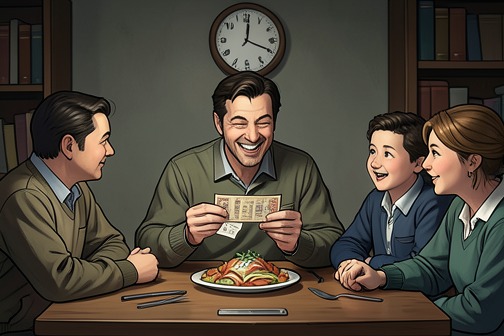
[Leon](entity:character-recall-character-leon-a75464f214f7) Fisher’s ten-million-dollar state-lottery win turns a proposed payment into an apparently legitimate stroke of luck, bringing a distant negotiation into the Fisher family’s kitchen. [Lev Zubov](entity:character-recall-character-lev-zubov-63bcedefa1f3) arranges for Leon to win the money as part of an effort to secure a conversation with [Aelita West](entity:character-recall-character-aelita-west-1c5629bc3002)’s sister; when the lottery succeeds, the family celebrates, while [Flynne Fisher](entity:character-recall-character-flynne-fisher-554d3bcb279f) recognizes that the windfall has grown out of the same dangerous network of favors and protection shaping life in [Clanton](entity:location-recall-location-2c12970adf7a) County.
## The Lottery as a Negotiated Payment
The win originates in Lev’s conversation with Aelita West’s sister, whom he wants to speak with. She insists on hearing a specific sum before proceeding. Lev offers ten million dollars, slightly more than the fee associated with a supposed murder contract, but the proposed recipient says that the amount would be too much for her cousin to receive through [Hefty](entity:organization-recall-organization-hefty-2ea160e4f5bd) Pal. Lev therefore proposes a different channel: Leon can win the same sum in the state’s next lottery, making the payment appear entirely legitimate. The arrangement converts a negotiation into a public-looking prize, with Leon as the nominal beneficiary and the lottery as its cover.
The transfer is also entangled with Lev’s personal effort to impress [Aelita](entity:character-recall-character-aelita-242d2c280053)’s sister. He has already offered her something he believes money cannot buy: a thylacine, an animal Lev had described to him as almost a ghost story. She does not want it, and neither does Lev if they are to be serious about continua, so Lev says he had it given to Aelita instead. The animal becomes a minor part of Aelita’s security, known to her, while the proposed lottery win supplies the practical financial inducement in Lev’s effort to speak with her sister. The two gifts reveal different limits of generosity: the thylacine can be redirected, but the cash offer requires a route the recipient will accept.
## A Windfall Arrives at Home
[Flynne](entity:character-recall-character-flynne-2b508811bbfe) sees the arrangement take material form when Leon pulls a bright, stiff state-lottery ticket from his back pocket. His image appears in a blurry foil hologram beside a retinal scan. Flynne observes that the ticket looks as though it should contain his genome, and recalls that she and Leon had been taught by their mother not to pay what she called the stupidity tax. Against that household skepticism about lotteries, the ticket is evidence that this one may be different. Flynne asks whether Leon will win ten million; the answer is that the amount is not exactly that, but if he wins, they will know they are onto something.
The confirmation comes at seven thirty the next morning. Leon wakes everyone to announce that he has won ten million dollars in the state lottery, while their mother is making breakfast. The news places a large, consequential transfer inside an ordinary family scene: the unusual financial arrangement resolves as a kitchen-table fact, not merely as a promise made during Lev’s negotiation. For Flynne, the win confirms that the plan has worked, but it does not make the surrounding dealings disappear.
## The Money’s Local Context
The lottery is one strand in a wider pattern of money, protection, and political influence. After four men die on [Porter Road](entity:location-recall-location-porter-road-b8724bb7921e), [Burton Fisher](entity:character-recall-character-burton-fisher-69e279c92a18) pays [Corbell Pickett](entity:character-recall-character-corbell-pickett-7aaa9e78709b) to help ensure that the deaths are lost track of. [Reece](entity:character-recall-character-reece-fedb7b4ab9bb) carries the Clanton money to Pickett with [Carlos](entity:character-recall-character-carlos-8b92f5b0d880), using two shopping bags. [Janice](entity:character-recall-character-janice-d86fff714ef3) explains to Flynne that state police might pay attention longer than local authorities, but Pickett has influence in the statehouse that can shorten that attention for a price. She also punctures Flynne’s childhood image of Pickett as a former Tesla dealer who rode with the mayor in a Christmas parade: drug production in the county, Janice says, does not happen without Pickett taking his share.
The lottery money therefore arrives in a family already negotiating with systems that can turn wealth into access, official inattention, or protection. Lev’s plan presents the payment as legitimate, but its purpose is embedded in a conversation about a supposed murder contract and in a larger story where money buys influence over investigations. Later, when Flynne jokes that her cousin has just won the lottery, Lev says he did not know, but that they will find a better way; the exchange shows that Leon’s windfall does not settle every arrangement or remove the need for other means.
## Consequences and Narrative Significance
Leon’s win gives the family a sudden public fortune, but the novel’s emphasis falls on how the prize was arranged and what it connects. A lottery ticket—an object Flynne associates with a foolish tax—becomes the mechanism through which Lev can offer a large sum without handing it over directly. The contrast between the ticket’s official appearance and its negotiated purpose makes the event a compact example of the book’s entanglement of private relationships, corporate power, and local political economy.
The win also enters Flynne’s understanding of her family’s precarious security. At one point she sees the cartoon bull reflected in a bar mirror and resists giving it the finger, thinking of the profile it might keep on her; Leon’s joke that everyone is after his money makes the newly acquired fortune a visible point of attention. Elsewhere, Flynne is told that Janice is at her house minding her mother, and the household’s ordinary responsibilities continue even as threats and secret arrangements gather around them. The prize is real, but it is not an escape from the world that produced it: it is another resource within that world, tied to a bargain whose consequences reach beyond the lottery draw.
Event 7
Aelita West’s murder and disappearance
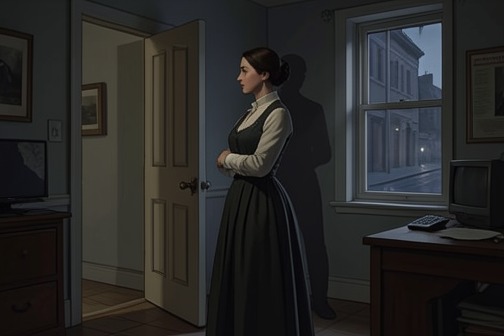
[Aelita West’s murder and disappearance](entity:event-recall-event-aelita-west-s-murder-an-bf99e00bad5d) is the unresolved crime that makes [Flynne Fisher](entity:character-recall-character-flynne-fisher-554d3bcb279f) a witness in an investigation crossing between her native continuum and a future [London](entity:location-recall-location-london-420923d4a60a). [Flynne](entity:character-recall-character-flynne-2b508811bbfe) remembers seeing something that seemed to consume [Aelita](entity:character-recall-character-aelita-242d2c280053), but cannot give a clear account of the scene; investigators likewise cannot determine what she witnessed. The uncertainty is not a reason to dismiss her testimony: someone has apparently tried to kill her at home, presumably because she may have seen the perpetrator or an accomplice.
## The Killing and Its Uncertain Witness
The murder first reaches Flynne as an accusation against someone else: she is told that Americans are saying [Wilf Netherton](entity:character-recall-character-wilf-netherton-53b99127730d) killed Aelita. That allegation does not settle what happened or establish who was responsible. Instead, the investigation reveals how little can yet be known, even by the people trying to reconstruct the event.
[Ash](entity:character-recall-character-ash-4997dc421b44) tells Flynne that she may have witnessed Aelita’s sister’s murder. Flynne reacts with alarm and asks whether the scene was real. When Netherton questions the qualification, Ash explains that Flynne saw something, but there is no evidence showing exactly what. Flynne’s own fragment is brief: she says that it “Ate her up.” The phrase conveys the force of what she remembers without supplying a stable, complete account of the killing.
Ash connects this gap in knowledge to Flynne’s presence in London. She is there through a peripheral: a remotely operated body that is physically present in the future even though Flynne herself remains in her own continuum. Ash suggests that this unusual embodiment may help explain why the investigators cannot establish exactly what Flynne perceived. The technology makes the encounter possible, but does not make her memory transparent or turn an uncertain impression into conclusive evidence.
## A Witness Made Vulnerable
When [Ainsley Lowbeer](entity:character-recall-character-ainsley-lowbeer-41b557365a63) speaks with Flynne, she gives a sharper account of the stakes. Flynne witnessed a homicide and saw the face of someone who might have been either the perpetrator or an accomplice. [Lowbeer](entity:character-recall-character-lowbeer-e57df8106927) also tells her that unknown people have since attempted to have her murdered in her native continuum, presumably because they know she is a witness. The threat makes the unresolved sighting consequential: the investigation has not established what Flynne can identify, but someone may believe her knowledge is dangerous.
Flynne accepts a role as a witness rather than withdrawing from the inquiry. She tells Lowbeer that she needs someone who will back her up when she returns home and explains what is happening. She then asks whether Lowbeer is pursuing whoever sent the gray knapsack-like device to kill Aelita, as well as the person who brought Aelita onto the balcony. Lowbeer confirms that she is. Flynne offers to testify if the case reaches trial, adding that she would do so in any event. Her commitment is made despite the uncertainty surrounding her memory and the danger already directed at her.
## The Investigation and Its Wider Stakes
The murder does not remain a private mystery. In the future London investigation, Flynne’s account links the uncertain killing to a possible accomplice and to an attempted attack on Aelita. The distinction between what she saw and what investigators can prove remains central: her testimony is potentially important, but neither the identity of the responsible person nor the precise sequence of events is resolved in these scenes.
In Flynne’s home continuum, security is already organized around the possibility of violence. At her family’s property, [Reece](entity:character-recall-character-reece-fedb7b4ab9bb) describes a twenty-drone network, with twenty more in reserve, monitored by three men covering separate parts of the grounds. That detail does not establish a connection between the drone deployment and Aelita’s murder; it shows the heightened security surrounding Flynne’s household as the investigation and other threats converge on it.
The surrounding political landscape further complicates the meaning of protection. [Macon](entity:character-recall-character-macon-21dea3de81f7) warns Flynne that state police, [Homes](entity:organization-recall-organization-homes-99432227f05b), another federal agency, or the Marines might come after her side, and says that lawyers are needed because fighting such forces would be useless. He notes that Homes has finally gone to Pickett’s property after an explosion brought attention to a place it had largely ignored. Later, Macon reports that large Homes convoys are headed toward town, while a substantial detachment is already near what remains of [Pickett’s estate](entity:location-recall-location-pickett-c22a0de67b47). These developments belong to the wider conflict around Flynne and her community, not to established evidence identifying Aelita’s killer; their proximity shows how the murder investigation unfolds amid competing claims to security and authority.
## Unresolved Disappearance and Narrative Significance
The available evidence leaves Aelita’s fate after the killing unresolved. Flynne’s account suggests a horrifying event, while Lowbeer’s questions and the investigation’s search for a responsible person keep open the distinction between witnessing the homicide and understanding how it occurred. The case’s central clue is also its central limitation: Flynne may have seen a face, but the scene remains incomplete in her memory and unverified by the investigators.
That incompleteness drives the plot. Aelita’s murder draws Flynne into an inquiry conducted across radically different circumstances of embodiment and power; the apparent attempt on Flynne’s life turns her uncertain recollection into a matter of immediate personal danger. Her choice to testify gives the investigation a witness willing to stand behind what she can say, without pretending to know more than she does. The murder therefore remains both a crime to be solved and an absence around which the characters’ knowledge, fears, and actions gather.
Event 8
波特路四名袭击者之死
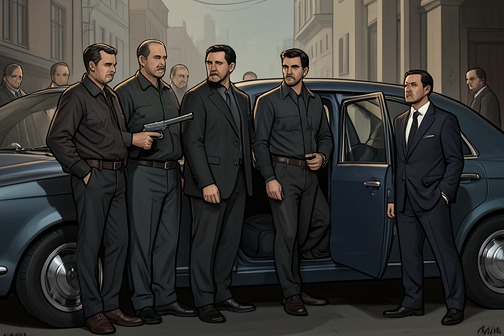
The deaths of four hired assassins on [Porter Road](entity:location-recall-location-porter-road-b8724bb7921e) turn an attempted contract killing into a test of knowledge, loyalty, and concealment. The men are killed before they can carry out their assignment, by an associate of [Lev Zubov](entity:character-recall-character-lev-zubov-63bcedefa1f3)’s polt who has been watching for their arrival. What follows is not a clean resolution: money is needed to make the deaths go away, and [Flynne Fisher](entity:character-recall-character-flynne-fisher-554d3bcb279f) is drawn into a version of events designed to preserve the truth while controlling what can be said about it.
## Background and Interception
The four men arrive to fulfill a contract against [Burton Fisher](entity:character-recall-character-burton-fisher-69e279c92a18). They do not reach their target. Lev later explains that the associate assigned to watch for potential attackers judged the men by their appearance and killed them before they could act. The immediate account is blunt about the outcome, but leaves the precise encounter undescribed: the critical fact is that a threat was intercepted in advance, and that the intervention itself created a new problem.
The killing is unlawful, and its aftermath requires payment to make the matter disappear. Lev situates that cost within the county’s political economy: the county sheriff heads law enforcement, while the county’s most viable economy is the illicit synthesis of drugs, and the sheriff is paid by the leading local synthesist. In that setting, the deaths cannot be treated as an isolated security incident. Their concealment depends on the same compromised local structures that make violence and political protection difficult to separate.
## [Flynne](entity:character-recall-character-flynne-2b508811bbfe) Learns What Happened
Flynne’s understanding develops through partial accounts and material clues. At the bar, she connects the scene on Porter Road—the square white tent and the drone swarm collecting tire molecules—with [Conner Penske](entity:character-recall-character-conner-penske-6826102560fa). She concludes that [Conner](entity:character-recall-character-conner-981da0e99ab6) killed the four men on his first night working. She has not yet had the face-to-face conversation with Burton that she wants, so this conclusion comes before a direct explanation from her brother.
Later, at Conner’s, Flynne finds [Macon](entity:character-recall-character-macon-21dea3de81f7) and [Edward](entity:character-recall-character-edward-43494b44a4ba) discussing a problem with an arm-mounted device. They say it is working now, but she recognizes that their explanation is false and understands why: someone she knows has killed people, and the others do not want him caught. The device has been altered; the gun, or whatever had held it, has been removed and replaced with a different attachment, its surface marked with black, rubber-like material. Flynne’s attention to those changes makes the aftermath legible without giving her a full account of the operation.
The group’s handling of the story is as consequential as the weapon’s modification. Flynne realizes that Macon and Edward are teaching her an account she can repeat without lying about what they told her. She is not simply being asked to keep silent: she is being given a bounded version of events that protects someone while leaving her able to tell the literal truth. This careful distinction becomes the episode’s central tension between what Flynne knows and what she can safely report.
## Telling [Janice](entity:character-recall-character-janice-d86fff714ef3)
Flynne recounts the chain of events to Janice while Janice makes strong coffee. She begins with Burton hiring her to cover his security shift while he went to [Davisville](entity:location-recall-location-davisville-2acce32d9b05), then tells of going to Porter Road with Burton and [Tommy Constantine](entity:character-recall-character-tommy-constantine-7e32d6b2987b), the unfamiliar car inside the tent, and the four dead men. When she reaches the killings, Janice interrupts with a single name: Conner. Flynne confirms it, and Janice listens on.
Flynne continues without spelling out what she suspects Macon and Edward did at Conner’s, although she can tell Janice understands that part too. She brings the story forward to [Leon](entity:character-recall-character-leon-a75464f214f7) driving her to Janice’s, followed by two small drones marked with squares of aquamarine duct tape. They had watched the group all the way from Conner’s. The drones extend the sense of surveillance beyond the site of the deaths: even as the people around Flynne manage what can be said, someone—or something—continues to observe them.
## The Ethos Behind the Violence
Flynne interprets the response through the military doctrine she associates with Conner and Burton. She recalls the Marine Corps ideal of [speed, intensity, and violence of action](entity:expression-recall-expression-speed-intensity-an-07ce8693db05), particularly as practiced in [Haptic Recon](entity:rule-recall-rule-haptic-recon-1e0baaaf014c): when intelligence is incomplete, the plan uncertain, or the equipment inadequate, decisive action is meant to compensate. In her understanding, the deaths on Porter Road embody that doctrine. This is her interpretation of the event, not a detailed reconstruction of how each man was killed.
She contrasts Conner’s apparent mode of action with Burton’s different way of seeing. Burton’s judgment, as Flynne understands it, also reflects the practical attention of someone used to hunting for food. The contrast prevents the episode from reducing the brothers and their associates to interchangeable operators: the same emergency can be understood through distinct habits of perception, even when the immediate outcome is forceful and decisive.
## Consequences and Significance
The deaths remove the immediate attackers before they can complete the contract, but they expose the people around Flynne to legal and political risk. The local associate’s action demands money to suppress its consequences; Macon and Edward alter the equipment and guide Flynne toward a limited account; and the drones keep watch as she moves away from Conner’s. Protection therefore brings its own liabilities, including a continuing need to manage evidence, testimony, and surveillance.
The episode also shows how Flynne becomes a witness without receiving a complete briefing. She gathers the meaning of the event from an interrupted conversation, a changed device, the reactions of people who know more than they say, and the account she later gives Janice. Her role is not merely to learn that the four men died. She must navigate the difference between recognizing what happened and possessing an account that can be told without exposing the people who acted. The Porter Road killings thus establish an early pattern of security in which rapid force can avert an immediate threat, while concealment and compromised institutions determine what follows.
Event 9
Leon Fisher赢得彩票
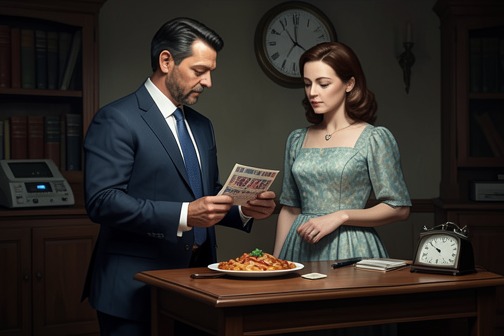
[Leon](entity:character-recall-character-leon-a75464f214f7) Fisher’s lottery win is both a real financial windfall and a manufactured result: people from another continuum arrange for his ticket to be selected by interfering with the lottery mechanism. The distinction between prediction and intervention matters. Leon receives the money, but the apparent stroke of luck is also evidence that outside actors can alter events in his world—and that his brother’s cooperation has helped make it happen.
## The Win and Its Immediate Aftermath
Leon is still enjoying the consequences of winning when he meets his sister, [Flynne Fisher](entity:character-recall-character-flynne-fisher-554d3bcb279f), at [Jimmy’s](entity:location-recall-location-jimmy-s-f200e000577b). He is finishing a second breakfast at the counter while in town for lottery-promotional media, an obligation attached to the prize. [Burton Fisher](entity:character-recall-character-burton-fisher-69e279c92a18) has driven them, and Leon says the promotional crew includes the man from whom he bought the ticket. Asked why he bought it from someone he dislikes, Leon explains that he wanted the satisfaction of winning at that person’s expense.
The amount left to Leon is more concrete than the spectacle around it: after taxes and fees paid to [Hefty](entity:organization-recall-organization-hefty-2ea160e4f5bd), he says he has about $6.5 million. [Flynne](entity:character-recall-character-flynne-2b508811bbfe) asks whether he has put any of it toward their mother’s medication. The question places the windfall against the family’s ongoing needs, rather than treating it as an abstract jackpot; Leon responds by thanking her, then jokes that everyone wants money from him now that he is rich.
At Jimmy’s, the win is already being treated as a possible proof of concept, though Flynne cannot identify the concept. She wonders whether a security company in [Colombia](entity:location-recall-location-b222d08d4dff) is involved and remarks that nobody is supposed to be able to do what has happened. Leon, by contrast, says the whole business feels like a movie to him. His bemusement gives the scene its double register: for Leon, the prize is an astonishing but tangible change in fortune; for Flynne, it is a clue that the apparent lottery result may be connected to a much larger operation.
## How the Winning Number Was Made
The later explanation turns the win from a mystery of improbable odds into a case of engineered selection. [Ash](entity:character-recall-character-ash-4997dc421b44) tells Flynne that her brother supplied the number on the ticket. The people behind the intervention did not know in advance which number would win, and they did not use predictive magic. Instead, they interfered with the mechanism of selection so that Leon’s ticket became the winner, relying on superior processing speed.
That explanation sharply defines Leon’s role. He bought an ordinary ticket and received the prize, but he was not the person who manipulated the draw, and he did not understand the larger purpose of the result. The intervention depended on the ticket number being provided by his brother; the agents then changed the selection process around that known ticket. What looked from outside like impossible foresight was, in fact, a technical alteration to the lottery’s operation.
Flynne’s initial suspicion that the win might demonstrate a security company’s capabilities is therefore close to the truth without yet grasping the method. The event does demonstrate an extraordinary capability, but not an ability to see the future: it demonstrates the ability to reach across the boundary between worlds and intervene in a consequential system. The distinction matters because it makes the win evidence of action rather than prophecy.
## Money, Family, and Local Power
The prize enters a family already accustomed to practical financial pressure. Flynne’s question about their mother’s medication makes the money’s possible use immediate, while Leon’s joking response shows the new social expectation that wealth makes him available to everyone asking for help. The win changes his financial position, but it does not remove the family’s existing obligations or settle how the money should be used.
The story also places the payment beside [Clanton](entity:location-recall-location-2c12970adf7a)’s established systems of money and influence. [Janice](entity:character-recall-character-janice-d86fff714ef3) tells Flynne that Burton has been paying [Corbell Pickett](entity:character-recall-character-corbell-pickett-7aaa9e78709b) to make the four men killed on [Porter Road](entity:location-recall-location-porter-road-b8724bb7921e) disappear from official attention. [Reece](entity:character-recall-character-reece-fedb7b4ab9bb) carried the cash to Pickett with [Carlos](entity:character-recall-character-carlos-8b92f5b0d880), using two shopping bags. Janice explains that Pickett’s leverage reaches beyond the county: state authorities might maintain interest longer, but Pickett has enough influence at the statehouse to have that attention shortened for a price. She further tells Flynne that anyone manufacturing drugs in the county has to give Pickett a share, despite the respectable public image he once presented.
This local economy of concealed payments provides a pointed contrast to Leon’s visible lottery prize. The lottery turns a hidden intervention into a public success story, complete with promotional media; Pickett’s money moves in bags to suppress attention and protect a criminal economy. Both episodes show money operating through systems of influence, but their effects differ: Leon’s win makes him conspicuously rich, while the payments to Pickett purchase discretion and political protection.
## The Win as a Clue and a Continuing Presence
The lottery’s significance does not end when Leon collects the prize. Flynne later sees the cartoon bull reflected in the mirror behind the bar at Jimmy’s. It winks at her, and she resists giving it the finger because she thinks that would be added to the profile it keeps on her. The moment places the win’s strange machinery alongside continuing observation: the lottery was not a self-contained anomaly, but part of a world in which people and systems can be monitored and acted upon.
The same stretch of reflection brings Flynne back to the violence on Porter Road. She remembers the square white tent and the drone swarm collecting tire molecules, and thinks that [Conner](entity:character-recall-character-conner-981da0e99ab6) killed the four men on his first night on the job. Her thoughts turn to the [speed, intensity, and violence of action](entity:expression-recall-expression-speed-intensity-an-07ce8693db05) associated with the Corps and [Haptic Recon](entity:rule-recall-rule-haptic-recon-1e0baaaf014c), a mode of acting decisively despite imperfect intelligence, plans, or equipment. The contrast she draws with Burton’s emphasis on a right way of seeing links the lottery’s engineered outcome to a broader tension between fast intervention and careful judgment.
A later exchange confirms that the win remains part of the operation’s practical infrastructure. When Flynne is missing, Lev says her phone and stomach tracker have moved together from their usual route into town, then north; the phone signal disappears, and the vehicle continues at excessive speed over rough roads. In another scene, Janice is at Flynne’s house minding her mother. These details do not alter how Leon won, but they keep the family and its movements within the network of surveillance, protection, and danger that the lottery first exposed.
## Significance
Leon’s win joins the ordinary language of luck to a mechanism of deliberate control. His joke about wanting to make the ticket seller suffer and his bafflement at the prize remain genuine parts of the event, even after Ash reveals how the winning number was secured. The irony is that Leon’s personal triumph was arranged without the predictive power outsiders might imagine: the operators needed his ticket number and changed the selection process itself.
The event therefore works as both a windfall and a demonstration. It gives Leon millions, raises immediate questions about family need, and supplies Flynne with an early indication that the people involved possess capabilities beyond ordinary local power. Its apparent simplicity—a ticket, a draw, a winner—conceals an intervention whose consequences reach into the family’s finances, their exposure to surveillance, and the larger contest over who can manipulate the systems governing their world.
Event 10
科文特花园的外围爆炸袭击

The [Covent Garden](entity:location-recall-location-c461f06836f2) peripheral bombing is an attempted assassination of [Wilf Netherton](entity:character-recall-character-wilf-netherton-53b99127730d) that becomes a counterterror operation and a warning about how little its protectors know. A rented sparring model has been secretly converted into a bomb; [Ainsley Lowbeer](entity:character-recall-character-ainsley-lowbeer-41b557365a63)’s rapid intervention prevents it reaching Netherton, but her flashbots destroy it with lethal force. The immediate danger is stopped, while the identity and wider purpose of the attackers remain unresolved.
## Threat and intervention
[Lowbeer](entity:character-recall-character-lowbeer-e57df8106927) tells Netherton that officials have noticed the recent rental of a peripheral with potential as a weapon. The transaction is monitored closely, she explains, and the device is nearby; her team believes Netherton is its target. The warning comes amid uncertainty over a whispering campaign and who is spreading it. Lowbeer’s response is practical rather than speculative: she asks Netherton and [Rainey](entity:character-recall-character-rainey-a87209cf2f8f)’s rental to come with her, then reaches for the ceremonial-looking baton she carries as a tipstaff.
The weapon’s concealed transformation makes the intervention abrupt. The tipstaff becomes a long-barreled gilt pistol, which Lowbeer raises and fires. The pistol itself makes no sound, but an explosion comes from elsewhere on the lower level. Small objects strike the walls and flagstones, and someone screams. Lowbeer returns the pistol to its tipstaff form and leads the others out of the Maenads’ Crush. The episode moves from a quiet warning to public violence in a matter of seconds, without first identifying the attacker or making the danger visible to the people caught nearby.
## How the bomb was made—and stopped
Afterward, Lowbeer explains that the peripheral had been rented from a martial-arts studio in Shoreditch as a sparring partner. The rental was made as soon as Netherton directed his cab to Covent Garden. Because the model was optimized for unarmed combat, Lowbeer had initially expected it to attack with blows, which could still have been fatal. The apparent purpose of the rental concealed a more dangerous alteration.
The sparring model’s brainpan normally contains a printed cellular replica of a brain: a nonfunctional trainer that registers concussion and other trauma so users can assess the force of their blows. Its modular cranium is made from printed bone assembled with biological adhesives, but neither the trainer nor the skull is intended to be serviced by users. Someone opened the peripheral’s cranium while it was being driven from Shoreditch, removed the trainer, and replaced it with an explosive charge. Lowbeer says it would have approached Netherton and detonated.
Unaware of the bomb, Lowbeer summoned flashbots. The four nearest units responded when her request cleared, positioned themselves around the peripheral’s head, and detonated simultaneously. Each carried only a fraction of a gram of explosive; correctly distanced and precisely spaced, they were meant to immobilize virtually anything. In this instance, their intervention stopped the bomb from reaching Netherton but killed the peripheral. Lowbeer acknowledges that her action might otherwise have caused a death, making the outcome a narrow escape rather than a cleanly controlled rescue.
## Aftermath and unresolved responsibility
The group emerges to find police units and smaller aerial devices around the dead peripheral. Its head has been destroyed, and a woman at the foot of the stairs is sobbing. Lowbeer tells someone to see to her immediately, then briefly raises her tipstaff. People look away from it, fearing its notice even though, as Netherton observes, they have already been recorded. The aftermath places emergency care, surveillance, and official authority in the same scene: the bystanders are marked as watched, while the distressed woman is treated as someone requiring immediate attention.
Lowbeer says the peripheral supposedly left Shoreditch alone, but the modified cranium means that cannot be true. She does not identify who opened it or who ordered the attempt. Netherton suggests the attack could have been meant to intimidate associates who survived him; Lowbeer specifically thinks [Lev Zubov](entity:character-recall-character-lev-zubov-63bcedefa1f3) may have been among its intended secondary targets. She adds that anyone trying to intimidate Zubov must be unusually powerful, reckless, or ignorant of his family. The bombing therefore establishes a wider threat without resolving its source, leaving motive and responsibility open.
## Security, violence, and narrative significance
Lowbeer calls the use of explosives unusual and says her side prefers to keep it that way because it resembles asymmetric warfare. Netherton’s companion calls the attack terrorism; Lowbeer rejects the term, arguing that terror should remain the state’s prerogative. The exchange is pointed: the state condemns an explosive attack while claiming the authority to define and reserve terror for itself. Yet Lowbeer’s own response also depends on explosives, deployed by flashbots under conditions of incomplete information. The difference lies less in the presence of violence than in who controls it and under what justification.
The incident makes that distinction unstable. Lowbeer’s intervention is protective, and it prevents the intended attack on Netherton, but the countermeasure has lethal consequences for the peripheral and a traumatic impact on a witness. The bomb’s conversion of a training device into a weapon also turns routine monitoring and ordinary rental into parts of a security emergency. By the end, the characters know that someone targeted Netherton and may have sought to threaten Zubov, but they still lack the attacker’s identity. The event’s lasting force is this combination of successful protection and unresolved danger: surveillance catches the approach, force interrupts it, and neither can explain who set it in motion.
Event 11
Flynne首次接入外围

[Flynne Fisher](entity:character-recall-character-flynne-fisher-554d3bcb279f)’s first connection to a peripheral is the moment a strange visual feed becomes an embodied encounter: after counting down with her eyes shut, she opens them in an unfamiliar room, sees hands that are not hers, and discovers that the body she inhabits is an anthropomorphic drone. [Ash](entity:character-recall-character-ash-4997dc421b44)’s explanation and [Wilf Netherton](entity:character-recall-character-wilf-netherton-53b99127730d)’s revelation that this is the future, but not [Flynne](entity:character-recall-character-flynne-2b508811bbfe)’s own, make the event the threshold between a puzzling device and contact with another world.
## The Test and the Transfer
In the trailer, Flynne follows a deliberately controlled test. She first checks the room around her: a window, the ceiling lights, Burton’s display, [Edward](entity:character-recall-character-edward-43494b44a4ba), and [Macon](entity:character-recall-character-macon-21dea3de81f7) near the closed door. She insists that the others wait until she says go, then closes her eyes and counts down from fifteen. The procedure leaves the moment of change suspended: she is still counting, expecting to see whether anything has happened, when the connection takes hold.
A pop accompanies the transition. Flynne initially experiences a flash of color resembling Burton’s haptics scar, with a taste inside her teeth; she continues counting, convinced that the attempt has failed. When she reaches zero and opens her eyes, the ceiling has sprung higher, the room seems reversed and backward, and the weight of a crown is gone. Her stomach turns with the change. The break is not presented as a smooth shift in viewpoint: her body registers the new place before she can make sense of it.
## An Unfamiliar Body
Flynne does not remember sitting up. Looking down, she finds hands that look like hers but are not hers, then sees a woman’s face reflected in the polished bottom of a steel canister. She freezes at the mismatch and rises quickly from what she had taken for a bed, discovering instead a padded ledge. She feels taller, hears a voice that is not her own, and begins to say that something is wrong. The scene makes bodily recognition the first evidence that the change is more than a visual illusion.
Ash, who is present in the unfamiliar room, offers the canister and says that it contains only water. She explains that Flynne is receiving input from an anthropomorphic drone, a telepresence avatar. Flynne need not consciously control it; Ash cautions her not to try while the group recalibrates the device. Macon’s equipment is imperfect, she says, but functional. What Flynne experiences as a disorienting bodily arrival is, from Ash’s perspective, a connection being adjusted.
The environment supplies further contrasts with the trailer. The room is narrow and small, yet higher than it is wide; pale polished wood covers the ceiling and walls, and round, flat metal fixtures glow softly overhead. When recalibration takes effect, Flynne touches herself with both hands, as if feeling a body that is not quite there. The room’s exact, unfamiliar surfaces and her incomplete sense of touch keep the new embodiment palpable even as the mechanism is explained.
## Recognition and Revelation
A man standing by a narrow open door greets Flynne by name. She recognizes him as the person she had associated with human resources, an identification that connects the strange encounter to people and dealings she already knows. Ash sets the canister on the ledge and asks Flynne to speak with Macon. The sequence thus moves from physical disorientation toward an attempt to establish who is present and what has happened.
Flynne tests the explanation against what she already knows. She asks whether the lawyer sent from [Clanton](entity:location-recall-location-2c12970adf7a) with bags of money had also been made to win a lottery. Ash denies it, then looks irritably at Netherton, indicating that he is supposed to handle the explanation. Netherton tells Flynne that this is not her world. When she asks whether it is a game, he answers that it is the future and gives the year. He immediately qualifies the statement: it is not her future. Contact has connected her world, or universe, to another one, rather than carried her forward along her own timeline.
## The Event’s Significance
The connection begins with a test whose result Flynne expects to judge by opening her eyes; instead, the changed body and room force her to question what seeing means. Her first proof is not a technical explanation but the hands, voice, height, and reflected face that fail to match her ordinary body. Ash’s account gives the experience a mechanism, while Netherton’s clarification gives it a cosmological consequence: the apparent future belongs to a different world.
That distinction prevents the encounter from being mistaken for ordinary time travel. Flynne has not arrived in a later chapter of her own life; she has accessed a separate world through a remote body. The episode therefore establishes both the promise and the unease of peripheral embodiment. The device makes distant contact feel bodily immediate, but its imperfect recalibration leaves Flynne confronting an experience that is real to her senses before it is intelligible to her understanding.
Event 12
Flynne在Cheapside会见Lowbeer
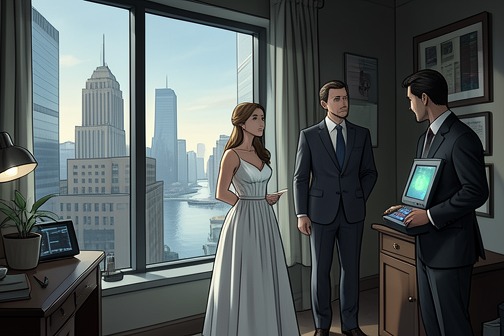
[Flynne](entity:character-recall-character-flynne-2b508811bbfe)’s meeting with Detective Inspector [Ainsley Lowbeer](entity:character-recall-character-ainsley-lowbeer-41b557365a63) in Cheapside establishes the personal stakes of the murder investigation and the unequal legal status of the two continuums. [Lowbeer](entity:character-recall-character-lowbeer-e57df8106927) identifies Flynne as the witness who can fill a gap in the case, offers protection in exchange for assistance, and agrees to Flynne’s immediate demand for a male [Peripheral](entity:object-recall-object-peripheral-63d8d66cc13d). Their brief conversation joins an unfamiliar [London](entity:location-recall-location-london-420923d4a60a) to a danger that has already reached Flynne’s home, while exposing the contradiction at the heart of Lowbeer’s work: Flynne is not considered legally real, yet is plainly a person whom others may try to kill.
## Setting and Arrival
Before the meeting, [Ash](entity:character-recall-character-ash-4997dc421b44) opens a binocular feed that replaces the room with an aerial view of London. From above, Flynne sees the city’s angular towers, greenways, forests, and glass-covered stretches of reclaimed river. Floating islands in the Thames have been rearranged, their submerged revolving blades positioned to draw more power from the river. The landscape is not simply a futuristic backdrop: its engineered systems show the extent to which this London has been remade, while leaving its history largely unexplained to Flynne.
Ash pilots the group toward Hampstead, and Lev explains that they have brought Flynne to meet someone. As they descend, Wilf sees Lowbeer looking up at them. The contrast between the aerial feed and the street below makes their contact markedly asymmetrical: the group can approach and observe from a hidden vantage, while the people walking beneath them cannot see the vehicle or its occupants.
## Lowbeer’s Introduction
Lowbeer stands among pedestrians in black hats, a white-haired woman in a jacket and skirt. The surrounding crowd appears unaware of her visitors; people react only to the turbulence from the unseen craft, steadying their hats as they walk. A new badge appears beside those of Lev, Ash, and Wilf: a simple crown in profile, gold on cream. Lowbeer activates privacy mode, muting the surrounding traffic and crowd for the conversation, and identifies herself as a detective inspector with the [Metropolitan Police](entity:organization-recall-organization-a5b8c075478e).
When Flynne asks whether Lowbeer is the reason she has been brought there, Lowbeer redirects the question to Flynne’s own choice. Had Flynne not stood in for her brother, she would not have witnessed the crime Lowbeer is investigating. The answer makes the causal chain explicit: an act of substitution in Flynne’s ordinary life has made her a crucial witness in an investigation conducted across continuums.
## The Witness and the Threat
Lowbeer says that Flynne witnessed a particularly unpleasant homicide and saw the face of someone who may have been either the perpetrator or an accomplice. The identity of that person remains uncertain, but Flynne’s observation is valuable precisely because the crime otherwise lacks a reliable witness. Lowbeer calls the resulting gap an annoyingly seamless absence: without Flynne, the investigation would have little to connect it to the person responsible.
The danger is not confined to the crime scene. Lowbeer tells Flynne that unknown people have since attempted to have her murdered in her native continuum, apparently because they know she is a witness. She adds that, under the prevailing legal opinion in Lowbeer’s world, arranging Flynne’s death would not constitute a crime because Flynne is not considered real there. Flynne rejects that distinction, insisting on her reality. Lowbeer agrees that Flynne is real, while warning that the people pursuing her would not hesitate to kill her or anyone else, in either continuum.
Lowbeer presents the situation both as a case and as a responsibility. The people behind the threats are her concern as a police officer; Flynne herself is also her concern, though in a different way. Her explanation of her own position complicates that offer of protection: she is very old through artificial means and says she does not feel entirely real to herself. She disapproves of the continuum hobbyists, including Zubov, even as she finds their activities fascinating. The conversation thus places Flynne’s contested reality beside Lowbeer’s own unease about an artificially prolonged existence.
## The Agreement and Its Significance
Flynne offers to serve as a witness at trial. Lowbeer replies that there will be no trial, only punishment, declining the judicial path Flynne expects while acknowledging her offer. Their exchange establishes a sharp difference in outlook: Flynne imagines formal testimony, whereas Lowbeer presents enforcement as the case’s likely conclusion. The meeting does not resolve the homicide, but it clarifies the method Lowbeer intends to use and the limited role Flynne’s testimony may play in it.
Flynne also asks for a male Peripheral, and insists on having one quickly. Lowbeer agrees. That bargain makes the alliance reciprocal rather than purely protective: Lowbeer needs Flynne’s witness account, while Flynne seeks access to a body through which she can participate in the future world. Once the deal is made, privacy mode ends, the sounds of Cheapside return with church bells, and Lowbeer calls up to the others to thank them for bringing Flynne. The feed then shrinks away. Lev and Wilf can still see Flynne, but Ash is looking at the blank surface. The scene closes on the same division that shaped its beginning: Flynne has gained a place in Lowbeer’s investigation, yet the means by which she enters this world remain mediated, selective, and dependent on others.
Event 13
Conner首次操控Pavel外围
[Conner](entity:character-recall-character-conner-981da0e99ab6)’s first control of [Pavel](entity:object-recall-object-pavel-8c03c24308c1)’s peripheral is a threshold moment in which remote embodiment stops being an explanation and becomes an intensely physical experience. Waking inside the artificial body, Conner discovers hands he can move and legs that can carry him at speed; his first response is not to stay with the group but to run. The scene makes the technology’s consequence personal and immediate: for a man whose body was torn apart, movement arrives as astonishment, escape, and joy all at once.
## Preparing the First Connection
Before the connection, [Flynne](entity:character-recall-character-flynne-2b508811bbfe) tells [Wilf Netherton](entity:character-recall-character-wilf-netherton-53b99127730d) and [Ossian Murphy](entity:character-recall-character-ossian-murphy-b6a4d2f69ab2) that she and [Ash](entity:character-recall-character-ash-4997dc421b44) will go in together. She warns them that Conner may react intensely and asks them to give him room if he gets excited. The caution establishes that the encounter is not simply a technical demonstration: the people around Conner are anticipating the emotional force of what he is about to experience.
In the back room of the large vehicle serving as their base, the peripheral lies on a bunk with its ankles hanging over the end. Ash addresses it as Pavel and tells it to close its eyes. It looks at Flynne before obeying. Flynne counts down silently, imagining the wobble at ten and continuing until Ash says zero. The sequence gives the transition a small, deliberate ritual: a still body, a countdown, and then the sudden arrival of someone else’s presence within it.
## Waking in Pavel’s Body
At the count, the peripheral’s eyes open wide. Conner raises its large hands into view, wiggles both sets of fingers, and touches each thumb to each finger in turn before reversing the motion. He sits upright as if propelled by a spring and comes to his feet. The detail of the finger test matters: his first inspection is not abstract. He checks what the body can do, one deliberate movement at a time, and the quick progression from hand movements to standing makes the new capacity visible as a series of discoveries.
Flynne identifies herself as Conner’s friend, and he confirms that he knows her. [Macon](entity:character-recall-character-macon-21dea3de81f7) had shown him a screen-grab, giving him a visual point of recognition before this encounter. Conner also recognizes Ash as resembling someone he once saw in an Atlanta club; he recalls that the person there called the figure a hyperspace elf and was, technically, overdosing. The exchange makes his arrival in the peripheral collide with a memory of another altered state, while Flynne introduces Ash by name and asks whether the colors are all right.
Flynne takes Conner’s hand and leads him out of the room, reassuring him that the two men outside are with them and are safe. There he is introduced to Ash, [Ossian](entity:character-recall-character-ossian-4b574fa868e0), and Netherton as [Conner Penske](entity:character-recall-character-conner-penske-6826102560fa), who served in the Marines with Flynne’s brother, [Burton Fisher](entity:character-recall-character-burton-fisher-69e279c92a18). The three men stare and nod. Conner’s changed way of standing registers even before he speaks again; when he decides handshakes are not in order, he puts his hands in the pockets of his gray pants instead.
## The Run Through the Garage
Conner looks around the cabin and asks whether it is a boat or a dry dock. Flynne tells him it is a big, fancy RV. He goes to the window, bends to look out, and mutters that he wants out. He yanks the door open, skips the gangway, flips sideways over the railing, and drops roughly fifteen feet to the ground. The sequence is startlingly direct: he tests neither the exit nor the limits of the body cautiously, but turns the first opening into a leap.
He comes up running across the garage, down the long line of cars belonging to [Lev Zubov](entity:character-recall-character-lev-zubov-63bcedefa1f3)’s father. Flynne follows behind him. As he passes beneath the arches, each one lights up with its shallow glow and then fades again; the movement reveals to her how vast the garage is, and how many arches it contains. The setting becomes part of the event’s scale: Conner’s speed carries him through a space that seems to open out in front of him, while the lights mark his passage only briefly before darkness returns.
As he runs, Conner screams and then whoops hoarsely between the screams. Flynne understands the whoops as an expression of overwhelming joy or relief: he can run this way, with fingers, in a body capable of the movement he has been denied. The sound is harder for her to hear than the screams themselves. That contrast keeps the scene from presenting the new body as a simple cure or uncomplicated triumph. Conner’s exhilaration is inseparable from the remembered loss that makes this freedom so powerful.
## Meaning and Immediate Ending
The event moves from controlled access to uncontrolled movement. It begins with Flynne’s warning, Ash’s instruction, and a countdown; it ends with Conner running beyond the others’ immediate reach. The shift gives the peripheral a narrative significance beyond its function as equipment: through it, a capability absent from Conner’s injured body becomes available, and the fact is registered in movement rather than explanation.
The garage run is also the scene’s emotional culmination. Flynne can follow Conner, but she cannot make the experience ordinary by accompanying him. He continues beneath the lit arches until the last one fades, leaving only darkness and the sounds he makes. The scene ends without a conversation that translates his response into a settled judgment. Instead, it lets the running, the fading lights, and the distant cries hold together the relief of regained movement and the pain against which that relief is measured.
Event 14
Fisher家地产上的两名入侵者之死
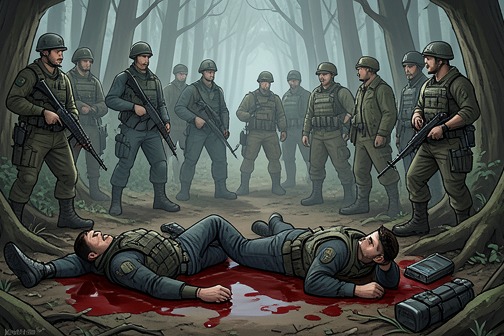
The deaths of two intruders on the Fisher property turn a layered security system into a test of judgment and authority: despite a coordinated drone net, armed guards kill two men who have made it deep into the woods, and the event helps draw attention to the armed force gathered around the family. The account leaves important particulars unsettled, but makes clear that the deaths are not an isolated security incident in a county where violence, political influence, and competing claims to law enforcement overlap.
## Security on the property
Burton’s security arrangements combine a substantial drone network with people stationed on the ground. [Reece](entity:character-recall-character-reece-fedb7b4ab9bb) tells Burton that Duval is up the hill, Carter is around the back, and [Carlos](entity:character-recall-character-carlos-8b92f5b0d880) is near the trailer; the team has twenty drones in the air and twenty more in reserve. The airborne units patrol in a repeating synchronized pattern, with each of the three men monitoring a portion of the property. Burton directs Reece to tell Carlos that they are going to the trailer. This deployment establishes the scale of the protection around the home, but the later deaths show that aerial coverage does not make the grounds impenetrable.
The violence comes to [Flynne](entity:character-recall-character-flynne-2b508811bbfe)’s attention after she hears a short sequence of gunshots while leaving the trailer. Four marked drones then pass by, and [Edward](entity:character-recall-character-edward-43494b44a4ba) tells her that someone had been on the property. The language is cautious: the intruders’ presence is reported as past, but Flynne still has to ask whether they are gone. The brief exchange gives the event its first consequence for her—an immediate awareness that the danger has crossed the boundary of the family’s land—without revealing who was shot or what had happened in the woods.
## What happened in the woods
[Tommy](entity:character-recall-character-tommy-6e67d140947b) later tells Flynne that two young men were found in the woods on the property. Burton believes they were much like the military men who spend time around him. Their ability to get beneath the drone cover leads him to suspect that they were military operators or specialists. Tommy does not present himself as an eyewitness to the shooting, and acknowledges that Burton and the others have not told him exactly what happened.
His reconstruction is that Carlos and Reece, posted with rifles and night-vision equipment, encountered the two intruders, who also had night vision, and shot them both. This is presented as Tommy’s inference, not a confirmed account of every detail. The contrast between the sophisticated drone net overhead and the old-fashioned rifles on the ground is central to the episode: the network can watch the property, but the decisive encounter takes place between armed people in the woods.
## Uncertain motives and local power
The intruders’ identities and purpose remain unresolved in the available account. Burton’s suspicion that they were trained operators rests on how far they penetrated the property despite its drone cover; the narrative does not confirm who sent them or what they intended to do. Their deaths therefore heighten the threat without settling its source.
That uncertainty sits within a local system where armed protection and official authority are already entangled. Flynne learns that Burton has paid [Corbell Pickett](entity:character-recall-character-corbell-pickett-7aaa9e78709b) to help make the four men killed on [Porter Road](entity:location-recall-location-porter-road-b8724bb7921e) difficult to trace. [Janice](entity:character-recall-character-janice-d86fff714ef3) explains that Pickett’s influence reaches the statehouse, and that his take from the county’s drug economy helps sustain that influence. Tommy, meanwhile, describes the wider economic dependence on Pickett’s building and drug-related economy as a complicated condition of local life. These details do not establish a connection between Pickett and the two men on the Fisher property; they show why the deaths occur in an environment where private force and compromised public power are difficult to separate.
## Consequences and significance
The deaths help make the Fisher property a focal point for escalating security concerns. [Macon](entity:character-recall-character-macon-21dea3de81f7) warns Flynne that further threats could come from unemployed veterans, state police, [Homes](entity:organization-recall-organization-homes-99432227f05b), another federal agency, or the Marines; if the latter institutions become involved, he argues, the family’s protection will depend on lawyers rather than a fight. The distinction exposes a problem at the heart of the episode: the guards may be able to respond to armed intruders, but that capacity does not give them the standing or resources to confront state or federal power.
Later, Homes deploys a substantial force in the area. The account describes large convoys of white trucks and a detachment at what remains of Pickett’s property. A rumor among the personnel is that Homes is coming to deal with the armed remnants of Pickett’s drug organization, while the story’s account of the fighting credits Burton, his friend, and a Veterans Affairs prosthesis with having stopped it. The deaths on the Fisher land are not identified as the reason for Homes’ deployment, but they belong to the same widening contest over who defines a threat and who is entitled to act against it.
The episode’s decisive shift is from apparent protection to exposed vulnerability. Twenty drones aloft and armed watchers on the ground do not prevent two suspected specialists from reaching the woods; the fatal encounter then brings more scrutiny and raises the stakes of the family’s security arrangements. By leaving the men’s identities and purpose uncertain, the narrative keeps the deaths from resolving the danger. Instead, the event marks how readily protection can become lethal force—and how quickly a family’s defense becomes entangled with a larger struggle among local power brokers, private security, and government agencies.
Event 15
Burton向Corbell Pickett买通掩护
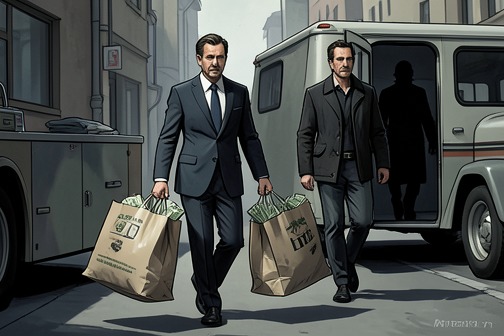
Burton’s payment to [Corbell Pickett](entity:character-recall-character-corbell-pickett-7aaa9e78709b) is a transaction to blunt the consequences of the four men killed on [Porter Road](entity:location-recall-location-porter-road-b8724bb7921e). Revealed to [Flynne](entity:character-recall-character-flynne-2b508811bbfe) by [Janice](entity:character-recall-character-janice-d86fff714ef3), it shows that the deaths are not merely a local matter for law enforcement: Burton has sought help from a wealthy county power broker whose influence reaches the statehouse, while the money moving through the deal is tied to the county’s drug economy.
## Discovery through [Reece](entity:character-recall-character-reece-fedb7b4ab9bb)
Flynne learns about the arrangement at Janice’s home, after describing the events that brought her there. Janice identifies the man from [Clanton](entity:location-recall-location-2c12970adf7a) who delivered a bag of money as Beatty, a lawyer. She explains that Reece had recently visited to discuss work with [Madison](entity:character-recall-character-madison-53d0d83590ae) and that some of the money is now hidden in the basement, in a hole behind the furnace. The discovery makes the payment tangible: it is not a vague rumor about Burton’s dealings, but cash that has entered the household’s orbit.
Reece’s role is a link in a longer chain. Janice says he carried money to Pickett with [Carlos](entity:character-recall-character-carlos-8b92f5b0d880), using two shopping bags. Reece had divulged too much from Burton and [Conner](entity:character-recall-character-conner-981da0e99ab6)’s point of view, but not enough from hers; Janice characterizes him as someone who loves secrets and wants others to know he possesses them. His willingness to talk is how Flynne gains access to information Burton has not yet discussed with her.
## The payment and its purpose
Janice connects the money to the four dead men on Porter Road. Burton is paying Pickett to have them become difficult to trace, although Janice observes that they might soon have been lost track of in the county anyway. The state police are likely to keep their attention on the deaths longer, but Pickett, she says, has influence at the statehouse that can shorten that attention for a price. The bargain therefore concerns not only concealment but the anticipated reach of investigators beyond the county.
The arrangement places Burton’s payment within an unequal local system. Pickett’s leverage is not presented as formal authority over the state police; rather, Janice describes political influence as something he can use to reduce the duration of their scrutiny. Money buys access to that influence, converting the deaths into a problem that can be managed through connections as well as through ordinary law enforcement.
## Pickett’s position in the county
Flynne initially recognizes Pickett through remnants of his public image. He once owned the Tesla dealership, rode with the mayor in the Christmas parade, and was widely assumed to be the county’s richest man. She had seen him at parades when she was younger, but not in recent years. That older, civic-facing image makes it difficult for her to connect him to Burton’s payment and the four deaths.
Janice corrects that understanding with a broader account of Pickett’s power. In her view, his influence is inseparable from the county’s drug economy: no one produces even a small amount of drugs there without Pickett receiving a share. The money Burton pays him is therefore not simply a rich man’s fee for discreet assistance. It passes through a system in which Pickett profits from the activity underlying local corruption and can also offer political cover when violence threatens to attract scrutiny.
## Family knowledge and the event’s significance
Flynne protests that she would have heard about Pickett’s role before. Janice’s answer reframes that silence as protection: Flynne’s family and friends have taken care of her partly by avoiding even mentioning him. The omission has allowed Pickett to fade from her awareness, despite the reach attributed to him. Her discovery is thus also a change in what she understands about her own community and about the people who have been shielding her from its power arrangements.
The payment also complicates the boundary between Burton’s security work and the local political economy. Flynne has already encountered an employment arrangement whose real client is not immediately apparent; here, the consequences of Burton’s actions likewise depend on intermediaries, hidden money, and access to a power broker. Through Janice’s account, the deaths on Porter Road become an exposure of how violence, drug revenue, and political influence can reinforce one another in Clanton County. Burton’s attempt to secure protection does not erase the killings; it reveals the machinery through which their investigation may be curtailed.
Event 16
Corbell Pickett到Fisher家谈判
[Corbell Pickett](entity:character-recall-character-corbell-pickett-7aaa9e78709b)’s visit to the [Fisher home](entity:location-recall-location-beebb16cb83e) is a negotiation over who gets to stand between the Fishers and [Milagros Coldiron](entity:organization-recall-organization-milagros-coldiro-850210f40670). Pickett offers immense money and access to state politics, but the price is personal access to the mysterious company’s real principals; [Flynne](entity:character-recall-character-flynne-2b508811bbfe) answers by naming [Wilf Netherton](entity:character-recall-character-wilf-netherton-53b99127730d). In the domestic setting of [Ella](entity:character-recall-character-ella-90e3fa62618f) Fisher’s living room, the encounter makes plain how local political influence, criminal money, and a much larger corporate power are being drawn into the same bargain.
## Background: money, protection, and local power
Before Pickett arrives, Flynne has already begun to understand that the four men killed on [Porter Road](entity:location-recall-location-porter-road-b8724bb7921e) have consequences beyond the violence itself. [Janice](entity:character-recall-character-janice-d86fff714ef3) explains that [Burton Fisher](entity:character-recall-character-burton-fisher-69e279c92a18) has paid Pickett a substantial share of the money circulating in [Clanton](entity:location-recall-location-2c12970adf7a), with [Reece](entity:character-recall-character-reece-fedb7b4ab9bb) taking two shopping bags of cash to Pickett alongside [Carlos](entity:character-recall-character-carlos-8b92f5b0d880). The payment is meant to make the dead men difficult to trace: local attention would fade quickly, Janice says, and Pickett has enough influence at the statehouse to shorten the State Police’s attention span for a price.
Janice also punctures Flynne’s childhood memory of Pickett as a visible, almost respectable local figure, once associated with a Tesla dealership and the mayor’s Christmas parade. His public standing does not sit apart from Clanton’s drug business. Janice says that nobody makes even a gram of drugs in the county without Pickett taking his share, and explains why Flynne had not heard this plainly before: her family and friends had protected her by avoiding his name. The visit therefore follows an existing arrangement. Pickett is not a new force entering the Fisher household; he is the power behind a payment Burton has already made, now demanding a larger and more durable position.
## The visit to the Fisher home
Flynne arrives at a room that has been prepared for the occasion. Ella has brought out the good china, while [Edward](entity:character-recall-character-edward-43494b44a4ba), unable to see, is finishing a sandwich at the kitchen table. Pickett stands by the fireplace beside Burton; Ella sits at the middle of the sofa. To Flynne, Pickett’s carefully even tan and evenly silver hair recall her mother’s observation that rich people look like dolls. The polished appearance gives the encounter a studied air, but his presence in the family living room remains startling: he is a man Flynne had not imagined belonging there.
Flynne greets him by recalling the Christmas parade, the public memory Janice has just complicated. Pickett’s manner turns out to be as familiar as his image. When Flynne later joins Burton and Deputy [Tommy Constantine](entity:character-recall-character-tommy-constantine-7e32d6b2987b), Pickett sits in a rocker with a tan slipcover and continues talking in the persuasive cadence of his old dealership commercials: each sentence begins narrowly and widens into a final emphasis, like a nail being driven home. His commercial polish is not incidental decoration. It is part of how he presses a deal, making a demand sound like the practical conclusion of a conversation.
Pickett says the people in the statehouse will not speak directly to the Fishers; the company they have partnered with will have to go through him. He adds that the money already spent merely opened the door, and that regular maintenance payments will now be due. The terms recast the earlier payment over the four dead men as an opening fee, not a settled favor. The Fishers’ access to the state government is to remain conditional on Pickett’s continuing cut.
## The bargain over Milagros Coldiron
Pickett identifies the company as Milagros Coldiron, deriding its name as poor Spanish for “cold iron.” Flynne says she does not know why the company calls itself that. Pickett’s concern is not the name but the scale and opacity of its money: he tells her that, while driving to the house, he learned that Milagros had bought an interest in a Dutch bank for more than the value of Clanton and the next three counties combined. He asks what the company wants from the Fishers, and Flynne can offer only the answer she has been given: it chose them.
Pickett tests whether Flynne and Burton understand the danger of partnering with a company of that scale. Neither answers at first. He then puts his own offer plainly: he can partner with Milagros immediately, and the result for the Fishers would be money beyond what they know how to imagine. Refuse him, and they have no statehouse connection, “as of now.” The offer is both inducement and threat. He presents himself as a route to extraordinary wealth, while reminding them that he can close off the political access they need.
Flynne turns the question back on him. If he is uncomfortable not knowing where the money comes from, what would make him comfortable? Pickett says he needs access to the people he is really dealing with. The company, he points out, did not exist three months earlier; he wants someone whose name he knows to tell him what it is a shell for. This request exposes the imbalance beneath his confidence. Pickett can command statehouse connections and extract a share of local drug profits, but he cannot simply identify or reach the new corporate power without the Fishers’ cooperation.
Flynne gives him the name he wants: Netherton. The answer means Wilf Netherton, the person she can identify as a contact for the company’s side of the arrangement. Burton looks at her, but his expression does not change. The scene leaves the significance of the name contained in the room rather than spelling out a new alliance: Flynne supplies a possible channel, while Pickett has made clear that his desired role is to reach the principals themselves.
## [Tommy](entity:character-recall-character-tommy-6e67d140947b)’s departure and the limits of the deal
After Flynne names Netherton, Pickett turns to Tommy and tells him to make sure the matter involving “the two boys” has been taken care of, invoking Jackman’s assessment that Tommy is good with details. Tommy agrees, addresses Burton and Flynne, and leaves through the kitchen. Flynne hears him put on his jacket and zip it, then hears the blinds on the back door rattle as he goes out. His exit removes the deputy from the negotiation just as Pickett has established that the conversation concerns more than business etiquette; the armed pistol Flynne noticed tucked into Tommy’s waistband had made the security surrounding the meeting visible.
Pickett praises Burton for having a smart sister. Burton gives no answer. The silence does not settle whether he approves of Flynne’s disclosure or simply declines to react in front of Pickett. What the scene does establish is that she has become an active negotiator: she listens to the terms, recognizes the value Pickett is trying to extract, asks what would satisfy him, and identifies a route to the company without pretending to know more than she does.
## Significance
The visit brings three scales of power into one ordinary room. Pickett’s local control is grounded in payments, drug revenue, and the ability to influence state attention; Milagros Coldiron represents a newer and vastly richer force whose scale is marked by its bank investment; the Fishers occupy the uneasy middle, needed by both sides because they have been chosen by the company and already have a connection to Netherton. Pickett’s demand for a regular maintenance payment extends his local system of extraction into the corporate relationship, while his request for a named intermediary shows that money alone cannot buy him knowledge or access.
The domestic details sharpen rather than soften the confrontation. Ella’s good china, Edward’s sandwich, and Pickett’s immaculate appearance place a political and criminal bargain inside family life. Even Flynne’s earlier glimpse of the cartoon bull watching her in a bar mirror, and her decision not to insult it because it might add the gesture to her profile, belongs to the same pattern of scrutiny: she is learning to treat observation as something that can be stored and used. At the Fisher home, she applies that alertness to the people in front of her. Pickett leaves with a name, but no promise from the Fishers that he will control their partnership.
Event 17
The Jackpot

[The Jackpot](entity:event-recall-event-the-jackpot-0933356c7c71) is a decades-long, multicausal collapse that kills most of humanity and remakes the world of [Wilf Netherton and Ainsley Lowbeer](entity:relation-recall-relation-wilf-netherton-and-a-ba51bb10e53a). It is not one cataclysm followed by a clean break, but an accumulating climate of crises: environmental damage, shortages, crop failures, disease, and social breakdown overlap without a single beginning or decisive end. Its consequences include a radically reduced population, altered political and economic power, and the technological landscape from which the novel’s future characters look back toward an earlier, still-diverging world.
## A catastrophe without a single event
Wilf explains the Jackpot to [Flynne Fisher](entity:character-recall-character-flynne-fisher-554d3bcb279f) as something unlike the familiar apocalypse story: there is no lone disaster after which survivors simply run around with guns or face a new monster. The catastrophe is multicausal and drawn out, more like a worsening climate than a discrete event. Its very structure frustrates the expectation that history can be divided neatly into before and after. The characters can name the Jackpot, but that name gathers together a long succession of causes and consequences rather than identifying one moment of origin.
The causes are anthropogenic, though not necessarily intended. Human activity drives climate change, and the accumulating carbon burden contributes to worsening weather and the crises that follow. Earlier generations fail to understand the consequences in time, and even once the danger becomes known, they do not manage to reverse it. By the time the damage is undeniable, the opportunity to prevent it has passed. In this account, responsibility is broadly human and historical, but the resulting harm is not a deliberate plan: people create conditions they do not know how to control.
## The cascade and its human toll
The breakdown comes unevenly, through familiar kinds of crisis rather than one universal blow. Drought and water shortages, crop failures, the loss of honeybees and other keystone species, the disappearance of alpha predators, and the declining effectiveness of antibiotics accumulate alongside diseases that never become one defining pandemic but are individually large enough to mark history. The disaster is therefore both environmental and social: it changes the living systems people depend on while exposing the consequences of how many people there are and how they have transformed their surroundings.
The scale is devastating. Wilf tells [Flynne](entity:character-recall-character-flynne-2b508811bbfe) that the Jackpot kills 80 percent of everyone alive over roughly forty years. The figure makes the drawn-out chronology concrete: immense mortality occurs not in one instant but across generations, amid repeated emergencies. In Flynne’s own time, the danger is not merely a future event she can watch from a safe distance. She is told that her world is already entering a similarly systemic crisis, with most people expected to die over decades if its course is not altered.
## Technology, survival, and unequal outcomes
Scientific progress arrives during the worsening crisis, but not as a single rescue. Cleaner and cheaper energy, more effective ways to remove carbon from the atmosphere, new medicines, nanotechnology, and food-printing methods emerge incrementally. These advances illuminate a society that is otherwise deteriorating; they do not halt the suffering or restore the previous world. The contrast makes technological progress real but morally and practically incomplete: new capabilities appear amid continuing violence and losses that cannot be repaired by innovation alone.
The aftermath is sharply unequal. The richest can become richer as the population falls and ownership concentrates in fewer hands; continuous crisis also creates opportunities for those with resources. In Wilf’s world, towers built after the die-off serve wealthy residents, but they also absorb carbon still being produced. Survivors interpret that reduction in emissions as having dodged a bullet. The image captures a compromised recovery: the system becomes more sustainable in one measurable respect only after catastrophic loss, and its protective infrastructure serves both a shared environmental function and an elite population.
Nanobot assemblers arrive later, after an interval in which the crises have run their course. They help excavate and clean [London](entity:location-recall-location-london-420923d4a60a)’s buried rivers, maintain the city, and construct its towers and other buildings. Their capabilities explain much of the automated environment Flynne encounters in the future. Yet the assemblers belong to the aftermath, not to an uncomplicated solution: they help manage and rebuild a world whose population and social order have already been transformed by the Jackpot.
## Historical memory and the branching continuum
For Flynne, learning about the Jackpot links the future’s ruins and technologies to the familiar world she inhabits. Wilf describes the long disaster while she looks across the moonlit lawn at home, where [Leon](entity:character-recall-character-leon-a75464f214f7) has cut the grass with a push mower held together by baling wire. That everyday object gives the explanation a material contrast: her present still contains ordinary, improvised life, while the future’s history shows how fragile its conditions are. The account turns the remote future into a possible consequence of processes already underway, rather than an unrelated world.
The novel’s time structure makes that history politically consequential. When [Lev Zubov](entity:character-recall-character-lev-zubov-63bcedefa1f3) first connects with Flynne’s continuum, the connection creates a fork: the events that follow belong to a branch, and do not alter the actual past from which the future characters came. The original Flynne would, if still alive, be much older by Wilf’s time; records from the deeper Jackpot are incomplete or nonexistent, especially in the United States, so her ultimate fate cannot be established. The connection therefore does not offer a way to rewrite the history that produced Wilf’s world. It opens a separate history whose future remains uncertain.
That uncertainty matters because the assassination of President [Felicia Gonzales](entity:character-recall-character-felicia-gonzales-f2583a122e0b) is understood in [Lowbeer](entity:character-recall-character-lowbeer-e57df8106927)’s world as a tipping point into a deeper Jackpot. Lowbeer and Wilf hope that preventing it might help avert their political system in the branching continuum, but they can only steer events broadly and cannot guarantee the result. The Jackpot is thus both a history already suffered in one world and a threatened horizon in another. Its importance lies not in a promise that intervention will save the second continuum, but in the possibility of amelioration—and in the limit placed on anyone’s power to control what follows.
## Legacy and moral stakes
[Ainsley Lowbeer](entity:character-recall-character-ainsley-lowbeer-41b557365a63) describes the world she inhabits as the result of choices made while civilization was dying. She does not treat that survival as clean vindication: the actions taken were, tactically and strategically, the best available under the circumstances, yet the present remains the consequence of a compromised response to collapse. The Jackpot’s history consequently resists a simple division between innocent survivors and exceptional villains. Lowbeer warns Flynne against imagining that people who wield power are fundamentally other; ordinary human baseness, given room to grow, can produce much larger harms.
That warning continues into the post-Jackpot economy. [Coldiron](entity:organization-recall-organization-coldiron-81ed5709264a)’s effort to introduce advanced technology cautiously reflects knowledge that rapid technological change could destabilize the society it might also benefit. After [Matryoshka](entity:organization-recall-organization-matryoshka-ba7618dcdc32)’s financial apparatus collapses, Coldiron divests to move the economy toward something more normal, though it retains enormous resources. Flynne worries that the organization may become a new version of the klept, and Lowbeer insists that people must remain alert to their own capacity for wrongdoing. The Jackpot is therefore not merely a record of environmental failure: it shapes the institutions, technologies, and ethical caution of the surviving world, while leaving open whether those survivors can avoid reproducing the concentrations of power that flourished during the crisis.
Event 18
对补丁者岛的美国袭击
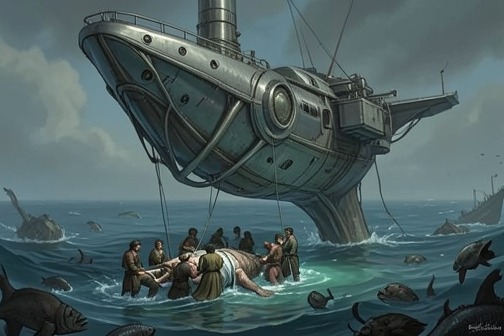
The United States attack on the [patchers’ island](entity:location-recall-location-e9c36221f663) is understood less through a direct account of its assault than through the anomaly it left behind: [Hamed al-Habib](entity:character-recall-character-hamed-al-habib-42ea52d72e1c)’s body was not treated as the expected security protocol required. [Ainsley Lowbeer](entity:character-recall-character-ainsley-lowbeer-41b557365a63) reads that omission as evidence of strategy, connecting the attack to al-Habib’s concealed identity and the islanders’ memorialization of the person he had pretended to be.
## The Island and the Attack
The target was an immense floating sculpture, though its curators insisted it was not a city but a ritual object. Built from suspended particulates recovered from the [Great Pacific Garbage Patch](entity:location-recall-location-great-pacific-garbag-d4fd7f569657), it weighed an estimated three million tons and remained afloat on segmented bladders, each as large as a major airport of the previous century. Fewer than a hundred inhabitants were known to live there, and what continually assembled the structure also seemed to consume cameras, leaving outsiders with limited knowledge of its people.
The island’s sparse population and unusual construction form the background to an attack whose precise course is not described in the available account. What becomes legible instead is the operation’s security logic: the system dealt with other people at the scene, but left al-Habib’s body where it fell. That difference, rather than a detailed account of the assault, anchors the later investigation.
## The Protocol Anomaly
While discussing her investigation with [Wilf Netherton](entity:character-recall-character-wilf-netherton-53b99127730d), [Lowbeer](entity:character-recall-character-lowbeer-e57df8106927) says the corpse’s untouched condition makes no sense under the protocols of a low-orbit American attack system. A system prioritizing her security, she reasons, would have immediately eliminated the possibility that al-Habib could pose a threat after death. He might have been fitted with a bomb or a swarm weapon; his size could have made such a device especially powerful. The system had dealt with the others, so leaving him untreated demanded a strategic explanation.
The account therefore distinguishes the system’s apparent security purpose from its selective application. Lowbeer does not treat the untouched body as proof of a particular motive; she treats it as a protocol breach that points to a reason for sparing or preserving the scene around al-Habib. The discrepancy converts a detail of aftermath into a clue about what the attack was meant to accomplish—or what it was meant to leave in place.
## Al-Habib’s Concealed Identity
Lowbeer explains that the dead figure was a peripheral: an artificial body al-Habib had inhabited, not the man’s original body. The one seen die was an expensive, bespoke peripheral that had existed for only a few days, complete with a genome, organs, and fingerprints sufficient to provide the formal forensic signs of a legal death. The island’s history had assigned that body to an imaginary figure.
Al-Habib had been present at the island’s beginning, when its first flotilla arrived, and perhaps during its early cannibalism, but he had not remained there in the identity later memorialized. His previous peripheral was most likely weighted and dropped into the water column, where the island’s assemblers would consume it. His immediate cohort had not known his real identity or the fate of that earlier body. After the American attack, the survivors were seen mortaring the dead peripheral into the fabric of the place, commemorating the person al-Habib had pretended to be. The attack thus intersected with a deception already built into the island’s history: the body left behind could be mourned as a local figure while its real occupant remained concealed.
## What the Aftermath Reveals
The attack’s significance rests on the contrast between visible destruction and managed appearances. Lowbeer’s account links the unusual treatment of al-Habib’s body to the provision of a convincing legal death, the ignorance of his cohort, and the survivors’ memorial. The islanders’ act of remembrance preserves the false identity, while the protocol anomaly gives Lowbeer grounds to question the official-looking result.
The island itself sharpens that contrast. It is at once a vast accumulation of recovered waste, an inhabited ritual object, and a place whose construction and population remain difficult to observe. Against that setting, the attack appears not simply as a security operation but as an intervention in what the island’s survivors could know and remember. The evidence establishes Lowbeer’s suspicion and the deception surrounding al-Habib; it does not settle who ordered the omission or provide a complete account of the assault.
Event 19
哈米德·哈比卜的假死脱身
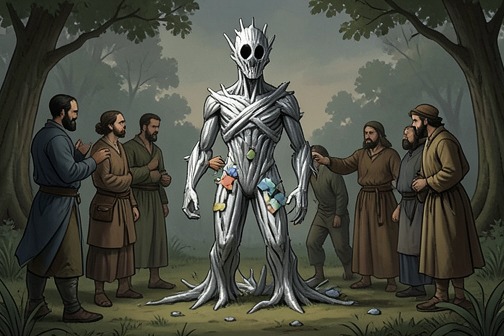
[Hamed al-Habib](entity:character-recall-character-hamed-al-habib-42ea52d72e1c)’s apparent death on the [patchers’ island](entity:location-recall-location-e9c36221f663) is a carefully constructed escape: the body memorialized there is not his, but a bespoke peripheral designed to satisfy forensic scrutiny. Its conversion into part of the island’s architecture makes the deception visible as a grotesque memorial even as it hides the fact that al-Habib has reached [London](entity:location-recall-location-london-420923d4a60a).
## The apparent remains
When Netherton and [Lowbeer](entity:character-recall-character-lowbeer-e57df8106927) find the patchers gathered around the upright corpse of their boss, the body appears hollow and eyeless, its open mouth held agape and its thin membrane supported by slender lengths of silvered driftwood. The scene initially resembles a communal burial or memorial. Lowbeer explains that the patchers are incorporating the figure into the island, replacing each of its cells with a small amount of recovered polymer. The body is thus being made into part of the place, not simply laid to rest.
The material transformation gives the false death a second life: the supposed corpse becomes an enduring piece of the island’s fabric. Yet the memorial commemorates a constructed identity. As Lowbeer puts it, the man has made his escape; the body is the means by which that escape could be mistaken for death.
## How the deception worked
The corpse was a peripheral with the DNA of an imaginary person. Its invented identity nevertheless had a highly documented past, and the bespoke body carried a complete genome, a full complement of organs, fingerprints, and the formal forensic signatures required to establish legal death. These details made the remains capable of passing as an identifiable person rather than an obvious substitute.
The deception depended on the Americans leaving the apparent remains undestroyed. Earlier, al-Habib’s previous peripheral had most likely been weighted and dropped into the water column, where the patchers’ assemblers would consume it. His immediate cohort was not told either the truth about his identity or the fate of that earlier body. The newly staged death therefore supplied the visible remains that the earlier disappearance had not: a convincing corpse and a public memorial, both attached to the identity he had pretended to be.
## A history of flight
Lowbeer describes al-Habib as a minor Gulf klept from Dubai and a fifth son who quickly became the black sheep of his family. He fled in his late teens under a death warrant, with the Saudis particularly seeking him. [The Aunties](entity:character-recall-character-the-aunties-15820993248c) knew where he was but did not disclose his location to the Saudis unless doing so became worth their while. His capacity to disappear thus predates the island and its false funeral; even his DNA, Lowbeer suspects, may have become largely imaginary as he kept ahead of his pursuers.
His connection to the patchers also has a family and cultural background. His Swiss mother was a cultural anthropologist who studied neoprimitives, a possible influence on the patchers he later based on that model. Lowbeer allows that he was present at the beginning, with the group’s initial flotilla, and perhaps during its cannibalism. But presence among them did not mean that they knew who he really was. Their memorial honors the figure he performed, while the real al-Habib escapes to London.
## The scene’s reversal
The event is disclosed through Lowbeer’s explanation after Netherton sees the island’s uncanny memorial. The reversal changes the meaning of the corpse: what looks like evidence of death is evidence of a planned exit, and the patchers’ act of incorporation preserves a false identity rather than the man himself. The scene’s grotesque physical image is inseparable from its forensic precision; polymer, DNA, organs, and fingerprints make the impossible-looking escape depend on meticulously credible evidence.
Event 20
Coldiron收购购物中心并设立总部
[Coldiron](entity:organization-recall-organization-coldiron-81ed5709264a)’s purchase of a [Clanton](entity:location-recall-location-2c12970adf7a) strip mall establishes the company’s North American headquarters and gives the local team a base beyond the Fisher family home and [Shaylene](entity:character-recall-character-shaylene-77dcfc1e9054)’s cramped back room. The acquisition transforms a mostly vacant retail strip into operational infrastructure: room for [Macon](entity:character-recall-character-macon-21dea3de81f7)’s printers, a place for the team to work, and, soon, a large interior fitted with hospital beds and IV stands. Its significance lies in this abrupt conversion of an ordinary commercial property into a center of work, care, and growing institutional reach.
## The Purchase and Its Setting
The mall is a strip at the town end of the road, with Fab at one end and [Sushi Barn](entity:location-recall-location-sushi-barn-487710d98869) at the other. Three empty storefronts separate them. One had once housed a popular miniature paintball attraction; another had been a nail and hair-extension business; the unit nearest Sushi Barn had apparently never been occupied. The former paintball store, its windows covered inside with peeling gray plastic, is where Burton brings [Flynne](entity:character-recall-character-flynne-2b508811bbfe) and tells her the space belongs to them now.
The announcement comes as a surprise because the purchase is not merely a rental or a plan under consideration. Coldiron has bought the entire mall, and the sale closed that morning; the paperwork is still moving through as Burton explains that ownership is already theirs. The speed and scale of the transaction make the previously neglected strip part of a new corporate foothold in Clanton.
## Why the Team Needs a Headquarters
Burton gives the purchase a practical rationale. Macon needs somewhere to keep his printers, and the team needs a place to work; Shaylene’s back room is no longer adequate. Their previous arrangement, operating out of a trailer by the creek, is likewise not a sustainable base. Centralizing at the mall therefore answers several needs at once: equipment storage, workspace, and a more settled location for the group’s operations.
The move also has a protective consequence for the Fisher family. Burton says that shifting the team’s activity to the mall gets the heat away from his mother, [Ella](entity:character-recall-character-ella-90e3fa62618f). The headquarters is thus not only an expansion of Coldiron’s local presence but a change in where the risks of the work fall: activity that had been associated with a family property and an improvised trailer is relocated to a company-owned site.
The purchase also brings Shaylene’s business into Coldiron. Burton tells Flynne that Shaylene has already sold it to the company, following her meeting with Flynne and what she saw Macon making. The narrative presents the sale as part of the same consolidation as the mall acquisition: Shaylene’s business and the team’s work are drawn into Coldiron’s expanding local operation, rather than remaining separate or confined to a back room.
## From Vacant Storefront to Working Base
When the group arrives, Macon presents the site as Coldiron’s North American flagship and headquarters. His formal blue business shirt and mostly black striped tie contrast with the crisp tails left untucked over old, holey jeans, a visual marker of the unfinished transition from improvised work to corporate identity. Shaylene, by contrast, is already dressed in a navy skirt suit and looks unexpectedly office-ready.
Inside, the headquarters is still visibly a conversion in progress. Shiny new work LEDs hang from clean yellow cables, but the walls are musty, patched drywall, and bear the traces of former counters and dividers. A rough doorway has been cut through to the rear of Fab; a blue tarp covers the opening on the shop side, and new electric saws remain on the floor. The space has been bought and put to use before it has been finished.
The equipment gathered inside signals the practical and medical dimensions of the operation. Three hospital beds have been partly freed from their factory wrapping, their white mattresses bare; three IV stands and stacks of white foam cartons fill the room as well. Macon says [Ash](entity:character-recall-character-ash-4997dc421b44) tells him what they will need and he orders it. The supply chain is already active, even while the headquarters still looks like a former retail unit under construction.
## Significance and Wider Context
The acquisition marks a shift from provisional arrangements to centralized infrastructure. A vacant shop once associated with a passing entertainment craze becomes a place for printers, work, medical beds, and supplies. Coldiron’s corporate language—flagship and headquarters—arrives alongside the visible roughness of tarp, exposed work lights, patched walls, and tools. The contrast makes the new institution feel both decisive and unfinished.
The move also belongs to a wider pattern in Clanton, where money and political influence shape which activities can continue and where pressure lands. Flynne later learns that Burton has paid [Corbell Pickett](entity:character-recall-character-corbell-pickett-7aaa9e78709b) to help make the four men killed on Porter difficult to trace, and that Pickett’s influence reaches state policing. Against that background, the new headquarters is more than a convenient address: it relocates the team’s work into Coldiron’s own property and away from Ella’s home, even as the local operation remains entangled with the county’s existing power structures. The mall’s purchase does not resolve those risks; it gives the group a more substantial place from which to operate.
Event 21
Flynne被绑架及获救
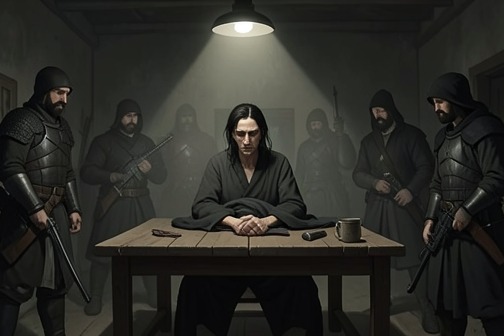
[Flynne Fisher](entity:character-recall-character-flynne-fisher-554d3bcb279f)’s kidnapping and rescue mark a sharp reversal from her ordinary movements around [Clanton](entity:location-recall-location-2c12970adf7a) to captivity inside [Corbell Pickett](entity:character-recall-character-corbell-pickett-7aaa9e78709b)’s estate, then to a coordinated escape by [Burton Fisher](entity:character-recall-character-burton-fisher-69e279c92a18) and [Macon](entity:character-recall-character-macon-21dea3de81f7). The abduction makes Pickett’s political reach physical: [Reece](entity:character-recall-character-reece-fedb7b4ab9bb) says he had no choice, [Flynne](entity:character-recall-character-flynne-2b508811bbfe) is delivered under armed guard, and her captors bind her to a table. Her rescue, built around Squidsuits, earplugs, and [Burton’s tomahawk](entity:object-recall-object-burton-398f1ab6eafe), reveals how quickly her family and allies can turn the same hostile terrain into an exit route.
## Causes and Background
Pickett’s power in the county is not news to Flynne so much as a truth her community has kept out of her sight. [Janice](entity:character-recall-character-janice-d86fff714ef3) explains that Burton has been paying Pickett to make the four men killed on [Porter Road](entity:location-recall-location-porter-road-b8724bb7921e) disappear from official attention. Pickett’s influence reaches beyond local law enforcement: he can use his connections at the statehouse to shorten the State Police’s attention for a price. Janice also punctures Flynne’s memory of Pickett as a conspicuous local businessman who once owned a Tesla dealership and rode with the mayor in a Christmas parade. In the county’s drug economy, Janice says, nobody builds even a gram without Pickett getting his share. Flynne’s shock comes partly from recognizing that family and friends have protected her by never mentioning him.
That protection has limits. Burton’s money has bought a measure of cover for the earlier killings, but it has not removed Pickett’s ability to act against the Fisher family. When Flynne is at [Edward](entity:character-recall-character-edward-43494b44a4ba)’s, Janice tells her that she is at Flynne’s house looking after her mother. Flynne gets up to return, hears several gunshots as she opens the door, and turns back in alarm. The account places the kidnapping amid a widening danger around her family, without establishing that the shots are part of Pickett’s abduction plan.
## Abduction and Captivity
Later, Reece is driving Flynne while she is tied to the car seat with zip ties. She protests, and he gives her no immediate explanation. When he finally says Pickett made him do it and that he had no choice, his fear becomes as revealing as his confession: Flynne understands that Reece is frightened too. His compliance presents Pickett’s authority not as a distant reputation but as a power that can compel people who have known Flynne for years.
The journey is made more isolating by the measures taken to prevent contact and tracking. Reece puts Flynne’s phone in a Faraday pouch. Meanwhile, Lev reports that the phone and the tracker in Flynne’s stomach traveled together toward the nearest town before turning north, after which the phone’s signal disappeared. The vehicle then exceeds speed limits on rough roads. The tracker keeps the people looking for Flynne from losing her location altogether, even as the blocked phone signal suggests that someone is deliberately cutting off one line of contact.
Reece brings her through Pickett’s grounds without turning in at the first gatehouse. At a less prominent entrance, two armed men in camouflage and helmets wait beside a golf cart. Flynne has stopped trying to talk to Reece because it makes his driving worse, and she is unwilling to risk a crash on a dark county road. She passes wrecked cars left unrepaired, a sign of the county’s inability to maintain even its roads, while wondering whether people in those vehicles might once have been in a situation like hers. Reece then cuts the tie fastening her to the seat and tells her to get out. His hand on her head as she exits feels startlingly intimate precisely because she cannot remember him ever touching her before.
The armed men take over. One attaches what Flynne guesses is a dog-training leash to the ties around her wrists; the other watches the gate close. They transport her in a cart marked CORBELL PICKETT TESLA along a rough gravel lane to the back of Pickett’s house. Under floodlights, the property joins incongruous images of wealth and industrial use: a factory-like addition, a McMansion, sheds, machinery under tarps, and swimming pools. Flynne is led past rows of tall white plastic tanks into a concrete room with a heavily worn steel-topped table bolted to the floor. A screw eye is fixed at its center. Her captors fasten her joined wrists to it with a blue [Homes](entity:organization-recall-organization-homes-99432227f05b) zip tie, leave the lights on, and bolt the door behind them. The room’s improvised restraint turns the kidnapping into confinement engineered around her body, not merely a threat delivered at a distance.
## The Rescue
While held in the room, Flynne sees the door and listens for signs of what may be happening outside, hoping her mother is safe and that Lithonia remains with her. Macon is working remotely: he tells her he is capturing the situation, then directs her to stand. As she plants her palms on the table, the bolt rattles and the door opens. A [Squidsuit](entity:object-recall-object-squidsuit-5f41a394a32f) enters, its camouflage making the wearer look like a roiling, distorted image. Macon identifies it as cuttlefish camouflage, the kind Burton and [Conner](entity:character-recall-character-conner-981da0e99ab6) used in the war.
The apparent attacker carries Burton’s tomahawk. Its specially notched head is used to cut the blue restraint at Flynne’s wrists, while a gloved hand offers two orange earplugs on a string. Burton drops under the table and comes up beside her; together, he and Macon get a Squidsuit over her. The suit first imitates the room’s light and then Flynne’s face, while Burton fastens it around her from the feet upward. Macon tells them to get out. Burton swings Flynne over the table and pulls her toward the door, where she sees a blurred foot beside a guard’s holstered pistol and blood on the concrete. The rescue is quick and practical: cut the tie, disguise the escapees, and leave before the guards can stop them.
Outside, the camouflage itself becomes a problem. Burton’s suit is too close to the part of Flynne’s that she is meant to see through, and their overlapping patterns produce a disorienting feedback of hexagons. Burton brakes the ATV and opens the suits near Flynne’s neck. He tells her, “[Easy Ice](entity:expression-recall-expression-easy-ice-8de2f5973140),” then warns her to keep the earplugs in because it might get loud. Conner appears nearby in shadow, but the figure is not Conner: it is a constructed decoy, an oddly lumpy body wearing a Gonzales mask. [Carlos](entity:character-recall-character-carlos-8b92f5b0d880) steps around it with a bullpup rifle. He takes Flynne’s Squidsuit and helps Burton dress the figure in both suits, arranging them to avoid the visual feedback that had disoriented Flynne and Burton. The decoy becomes difficult to distinguish from the shadow around it, turning the camouflage into a way to misdirect pursuit as well as hide the rescuers.
## Escape and Significance
Burton drives Flynne away from the house, past Pickett’s golf course and out through a gap opened in the estate’s white fence. Beyond the property, they reach the road and speed up. About half a mile on, [Tommy](entity:character-recall-character-tommy-6e67d140947b) waits beside his large white car, wearing a Sheriff’s Department helmet and a black jacket. He asks Flynne whether she is all right and whether anyone hurt her. Her answer is cautious rather than triumphant: she guesses she is all right. The reunion confirms that the escape has carried her beyond the estate, but does not erase the shock of being taken and restrained.
The episode’s shift from presumed security to abduction and back to escape makes control of movement its central stake. Flynne’s phone is shielded, her wrists are tied, her route is chosen by her captors, and the Homes tie fixes her to a bolt in the table. Against those constraints, the tracker preserves a means of locating her, Macon coordinates from outside the room, and Burton’s equipment becomes a tool for breaking out. The same technology that disorients the rescuers also conceals them; the same estate that traps Flynne contains a fence that can be opened. In the later conversation at dinner, Burton describes something on a scale of twelve on a war-crimes dial that stops at ten. The remark gives the escape a grim afterimage: getting Flynne out does not make the violence around her small or safely concluded.
Event 22
Pickett据点爆炸

The explosion at [Corbell Pickett](entity:character-recall-character-corbell-pickett-7aaa9e78709b)’s compound is both a sudden burst of violence and the event that makes a long-neglected power center impossible for authorities to ignore. Seen from the road as a fireball behind [Burton Fisher](entity:character-recall-character-burton-fisher-69e279c92a18) and [Flynne Fisher](entity:character-recall-character-flynne-fisher-554d3bcb279f), it is later revealed to have been large enough to bring [Homes](entity:organization-recall-organization-homes-99432227f05b) investigators to Pickett’s property and to leave Jackman dead. Its consequences reach beyond the blast: [Tommy Constantine](entity:character-recall-character-tommy-constantine-7e32d6b2987b) becomes acting sheriff, while local observers anticipate new pressure on the county’s political arrangements.
## The Blast on the Road
Burton, [Flynne](entity:character-recall-character-flynne-2b508811bbfe), and [Tommy](entity:character-recall-character-tommy-6e67d140947b) are almost back to town when Burton gives an abrupt instruction to someone who is not physically present: “Do it.” The fireball appears behind them, throwing the cruiser’s shadow forward across the road. The blast reaches them a little later; Flynne thinks she could have counted the miles between seeing the light and hearing the sound, as after a lightning strike. The sequence makes the explosion register first as a distant visual event and then as an impact heard from the moving vehicle.
Tommy slows the cruiser and asks Burton what he has done. Burton attributes the explosion to [Builders](entity:concept-recall-concept-builders-f1b70976ba7e), saying they have once again managed to blow themselves up. His explanation connects the blast to the county’s drug-building economy, but does not fully establish who set it off or precisely how it happened. The scene keeps the act itself at a distance: the travelers see its light, hear its report, and continue toward town.
## The Bomb and Its Delivery
The discussion afterward concerns the danger posed by the bomb and the possibility that its target might have survived. Flynne hopes the person in question is dead; another speaker answers that anyone who had seen how the bomb was delivered would know it was unlikely to approach unnoticed, even against someone wearing a [Squidsuit](entity:object-recall-object-squidsuit-5f41a394a32f). [Janice](entity:character-recall-character-janice-d86fff714ef3) adds that the group can only hope for the outcome they want. The exchange conveys the weapon’s conspicuous delivery and the uncertainty left in its wake, without resolving the target’s fate in these passages.
The question of how the attackers obtained Squidsuits remains open. That unanswered detail complicates Burton’s quick attribution of the blast to Builders: the explosion is associated with their drug operation, yet the means and participants are not fully accounted for. The event is therefore both an apparent act of destruction within the local criminal economy and a sign that the people involved may possess equipment that raises further security concerns.
## Jackman’s Identification and Tommy’s New Role
In the aftermath, Flynne learns that Burton is at Pickett’s. She asks why, and Janice explains that Tommy deputized him after Homes found Jackman. Homes recovered enough remains at Pickett’s to identify Jackman; Janice emphasizes how difficult the identification would have been before DNA testing, when investigators might have relied on dental records and a belt buckle. The blast has thus left physical evidence that makes identification possible, even as the condition of the remains underscores its violence.
Jackman’s death also changes local authority. [Macon](entity:character-recall-character-macon-21dea3de81f7) reports that Tommy is acting sheriff now that Jackman is gone, jokingly calling him “Sheriff Tommy” and noting that he has a busy job. Burton’s presence at Pickett’s is consequently not just a visit to the site of the explosion: Tommy has formally deputized him as the local response takes shape. The event shifts the county from a familiar sheriff’s administration into an unsettled period in which Tommy must assume command.
## Homes Arrives at Pickett’s
The explosion draws Homes to Pickett’s for the first time. Macon explains that Pickett had been building since he and Flynne were children, yet the property had not looked like a house for twenty years; it looked like what it was. Only an explosion on this scale got Homes there. The contrast is pointed: the compound’s long-standing character had not prompted this federal presence, but spectacular violence makes it legible to outside authorities.
Macon rejects the idea that Homes is behind all the drug-building as a conspiracy theory, while allowing that accommodation between the authorities and local interests may exist. With Jackman dead and Tommy newly in charge, Macon expects someone may quietly approach him. The blast therefore opens a political question without answering it: Homes has arrived, a local authority has changed hands, and the possibility of an arrangement between the state and the county’s illicit economy hangs over the aftermath.
Event 23
Aelita West’s murder
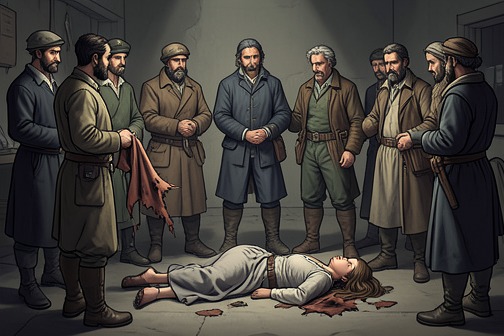
[Aelita West’s murder](entity:event-recall-event-aelita-west-s-murder-57274236d40e) drives an investigation that turns [Flynne Fisher](entity:character-recall-character-flynne-fisher-554d3bcb279f) from a remote observer into a potential witness. The case is marked by a gap between recognition and proof: [Flynne](entity:character-recall-character-flynne-2b508811bbfe) recalls what she saw, but the investigators cannot initially establish exactly what that experience contained, and even after [Hamed al-Habib](entity:character-recall-character-hamed-al-habib-42ea52d72e1c) is identified, his reason for killing [Aelita](entity:character-recall-character-aelita-242d2c280053) remains unresolved.
## The murder and Flynne’s uncertain testimony
The killing enters the investigation through Flynne’s possible presence as a witness. [Ainsley Lowbeer](entity:character-recall-character-ainsley-lowbeer-41b557365a63) tells her that she may have witnessed Aelita’s murder. Flynne responds with surprise, asking whether the event was real; the question registers the difficulty of reconciling her experience with the status of the body through which she encountered it. When [Wilf Netherton](entity:character-recall-character-wilf-netherton-53b99127730d) challenges the qualification in [Lowbeer](entity:character-recall-character-lowbeer-e57df8106927)’s account, Lowbeer says only that Flynne witnessed something and that there is no evidence yet establishing exactly what it was.
Flynne supplies her own stark description, saying that the woman was eaten up. The account makes clear that she remembers an appalling death, but it does not resolve what she could perceive or how completely she understood the scene. Lowbeer explains that Flynne’s presence is virtual yet physical, and uses that unusual mode of experience to account for the investigators’ uncertainty. Netherton objects that this explanation is confusing her. The exchange establishes a central evidentiary problem: Flynne may be essential to the case, but the investigators cannot treat her perception as a transparent record.
## From possible witness to committed participant
When Lowbeer explains why she wants to speak with Flynne, she identifies the murder as a peculiarly unpleasant homicide and says Flynne saw the face of someone who may have been either the perpetrator or an accomplice. The distinction matters: the recognition could identify the killer, but it could also point to someone involved without proving that person carried out the murder.
Flynne says she does not want to be the only person who has seen this and been there. She needs someone who will support her when she returns home and tells others what is happening. Lowbeer suggests that [Lev Zubov](entity:character-recall-character-lev-zubov-63bcedefa1f3) could arrange such support. Flynne then states that Lowbeer is pursuing whoever sent the gray knapsack device to kill Aelita, as well as the man who brought Aelita onto a balcony. Lowbeer confirms that this is her purpose. Flynne offers to testify at trial, adding that she would do so regardless. Her choice turns uncertain recollection into a commitment to stand behind the investigation, without making the underlying evidence any more conclusive than it is.
## Recognition and identification
The uncertainty becomes more immediate when Flynne later encounters a man connected with the balcony scene. Looking at him brings back the memory of seeing him kiss a woman’s ear on the fifty-seventh floor and hearing him call it a surprise. She also remembers a separate image of an SS officer’s head being blown apart amid horizontal snow, but recognizes that these were pixels and that the scene was not really France. The recollections place images from different experiences beside one another without making them equivalent: the remembered digital violence is not itself proof of the murder, while the man before her is no longer merely a figure in a mediated scene.
The encounter sharpens the practical stakes of her witness role. Flynne identifies the man through remembered visual detail, but the supplied account does not establish that he personally killed Aelita. That unresolved distinction echoes Lowbeer’s earlier caution that the face Flynne saw might belong to a perpetrator or an accomplice. Recognition advances the inquiry while preserving the question of individual responsibility.
## Hamed al-Habib and the unresolved motive
During the later confrontation, Netherton identifies the bearded man as Hamed al-Habib, the boss patcher. The revelation clarifies the identity and position of a figure tied to the case, but it does not by itself explain Aelita’s death. Afterward, Netherton asks why al-Habib killed her. Lowbeer answers that the reason is still unclear.
Lowbeer describes Aelita as having been involved with al-Habib for some time and apparently instrumental in bringing her sister aboard. She offers possible motives rather than a settled account: Aelita may have been jealous of al-Habib’s largely simultaneous relationship with [Daedra West](entity:character-recall-character-daedra-west-a222db6082ed), or she may have been considering exposing him to the Saudis. Lowbeer cautions that Aelita might instead have been merely entertaining the thought. The alternatives leave the emotional and political circumstances suggestive but inconclusive; neither is presented as a proven cause of the murder.
Lowbeer also places the family’s connections within a wider political background. She calls the family unpleasant and says she has known Aelita’s father since she was [Griff](entity:character-recall-character-griff-f9d8fca071c8)’s age, describing him as a co-conspirator in the assassination of [Felicia Gonzales](entity:character-recall-character-felicia-gonzales-f2583a122e0b). She expects Griff will soon have to deal with him in that capacity, while observing that in Lowbeer’s own continuum he is too well-connected to be troubled by the events. This information broadens the investigation’s political context without resolving the immediate homicide. Aelita’s murder remains consequential precisely because its central questions—what Flynne truly witnessed, who was directly responsible, and why Aelita was killed—are only partly answered.
Event 24
The attack on Coldiron
[The attack on Coldiron](entity:event-recall-event-the-attack-on-coldiron-4fbfb004d4df) is a violent assault whose consequences emerge in fragments: Burton is wounded by a ricochet, [Flynne](entity:character-recall-character-flynne-2b508811bbfe) and [Carlos](entity:character-recall-character-carlos-8b92f5b0d880) take on the attackers, and a heavily guarded departure soon becomes routine. Its aftermath makes the threat to the Fisher family newly immediate, while showing how quickly [Coldiron](entity:organization-recall-organization-coldiron-81ed5709264a)’s security operation becomes entangled with local and federal power.
## Assault and Immediate Aftermath
The account reaches the attack through its survivors rather than through a continuous description of the gunfight. After a shower, [Macon](entity:character-recall-character-macon-21dea3de81f7) carries [Conner](entity:character-recall-character-conner-981da0e99ab6) back to bed and helps him get his surviving arm into the sleeve of his Polartec. Conner reports that the [Squidsuit](entity:object-recall-object-squidsuit-5f41a394a32f) attackers shot Burton, praises Flynne’s fighting, and says Carlos managed to take down two of them. His rough, comic delivery sits beside the evidence of injury and exhaustion: Macon is wet and bare-chested from carrying Conner, while Conner needs help dressing.
Flynne later remembers bullet streaks on the concrete wall behind Coldiron and Fab. Burton was the only person hit by a ricochet, a distinction that registers as luck rather than safety. The attack has left visible marks on the building and made clear that even a secured site can be penetrated by armed opponents.
## Security, Exposure, and Escalation
The danger was not confined to the gunfight. Before the attack, Coldiron’s perimeter was already organized as a substantial surveillance operation: [Reece](entity:character-recall-character-reece-fedb7b4ab9bb) described twenty drones flying in a synchronized repeating pattern over the property, with twenty more held in reserve and three men each monitoring a third of the area. The scale of that net made the assault’s breach more consequential, not less; protection depended on continuous monitoring, yet the site remained vulnerable to armed attackers.
The attackers’ method also shaped the aftermath. In the truck, Flynne recalled the bullet streaks on the wall and understood that Burton’s ricochet wound could have been worse. Tacoma emphasized that the convoy and its precautions were meant to keep her alive and present: she had already been kidnapped, and the previous night’s shooters might have been targeting her rather than her brother. The attack therefore changed the meaning of security around her. A guarded ride, a hermetic vehicle, and the prospect of a breakfast burrito delivered under protection were not mere conveniences but parts of a response to a threat that could reach the family itself.
That response sat uneasily beside the wider political contest surrounding Coldiron. Macon feared that unemployed veterans might be manageable, but warned that an approach by state police, [Homes](entity:organization-recall-organization-homes-99432227f05b), another federal agency, or the Marines would be beyond what Burton could fight; Coldiron relied on lawyers for that prospect. He pointed to Homes’ presence at Pickett’s property after an explosion on a scale large enough to draw the agency there for the first time, even though Pickett’s place had been under construction since the characters’ childhood. In the later account, Homes was assembling a strategic deployment of vehicles and personnel, with two large convoys reportedly headed toward the area and a sizable detachment already at what remained of [Pickett’s estate](entity:location-recall-location-pickett-c22a0de67b47). Officials were presenting the operation as a cleanup of Pickett’s drug empire, while the account credited the apparent suppression of that threat to Burton, his friend, and Conner’s VA prosthesis. The attack thus becomes part of a struggle over who gets recognized as the source of order—and who can claim authority to impose it.
## A Threat That Outlasts the Shootout
The attack also sharpened the uncertainty around who was actually being targeted. Tacoma reminded Flynne that she had already been kidnapped and that the previous night’s shooters could have been after her rather than Burton. He described Coldiron’s precautions as an effort to keep her safe and present, turning the armored, filtered vehicle and guarded movements into a direct response to the possibility that violence against the site was also violence against her.
That danger sat within a widening contest over local authority. Macon distinguished between unemployed veterans, whom Burton might be able to handle, and state police, Homes, other federal agencies, or the Marines, against whom resistance would be futile; Coldiron, he said, had lawyers for such a confrontation. Homes’ attention to Pickett’s property after its enormous explosion offered a local precedent. Later, two large convoys of Homes vehicles and personnel were reported heading toward the area, while a sizable detachment was already at what remained of Pickett’s estate. The stated purpose was to clear the armed remnants of Pickett’s drug empire, although the account credited its apparent defeat to Burton, his best friend, and Conner’s VA prosthesis. The gunfire at Coldiron therefore belongs to a larger struggle over who can define a threat, claim credit for restoring order, and exercise force in its name.
## Political Pressure and the Meaning of Security
The gunfight’s aftermath also unfolds amid a struggle over who can define and enforce order. Macon distinguishes between unemployed veterans, whom Burton might be able to handle, and state police, Homes, another federal agency, or the Marines, against whom resistance would be futile; Coldiron’s answer to those larger forces is a formidable legal team. His example is Homes’ arrival at what remained of Pickett’s property after an explosion on a scale large enough to draw the agency there for the first time. The place had been under construction since the characters were children, but only the blast brought Homes to it.
Later, two large convoys of Homes vehicles and personnel are reported heading toward the area, while a sizable detachment is already at the remains of Pickett’s estate. The operation is presented as a cleanup of the armed remnants of Pickett’s drug empire, though the account credits its apparent defeat to Burton, his best friend, and Conner’s VA prosthesis. Against that backdrop, the attack on Coldiron is more than an isolated exchange of fire: it exposes how private security, local violence, and federal authority compete to claim the work—and the legitimacy—of keeping people safe.
Event 25
Daedra West’s celebration of Aelita’s life
[Daedra West](entity:character-recall-character-daedra-west-a222db6082ed)’s celebration of [Aelita West](entity:character-recall-character-aelita-west-1c5629bc3002)’s life is a memorial gathering at [Edenmere Mansions](entity:location-recall-location-edenmere-mansions-7b9897374fc6) that turns into a security crisis. Its conspicuous display of [Aelita](entity:character-recall-character-aelita-242d2c280053)’s face gives the occasion the shape of public remembrance, while Daedra’s warning to [Flynne Fisher](entity:character-recall-character-flynne-fisher-554d3bcb279f) exposes the danger beneath the ceremony: the people and protections around them cannot be taken at face value, and [Conner Penske](entity:character-recall-character-conner-penske-6826102560fa) is abruptly treated as a threat.
## Setting and Arrival
The gathering takes place in the building where Aelita had lived. Its entrance is marked by a striking, apparently temporary structure: a solemn-looking bouncy-castle-like installation that does not belong to the ordinary architecture of Edenmere Mansions. The vehicle is directed to the curb by a Michikoid carrying a luminous wand. Nearby, another vehicle evokes a six-wheeled silver Bentley, and a couple with shaved heads and Maori facial tattoos are briefly visible. The entrance is staffed by Michikoids in matching gray, quasi-military uniforms, making the memorial’s approach feel more like a controlled checkpoint than an ordinary reception.
[Wilf Netherton](entity:character-recall-character-wilf-netherton-53b99127730d) remembers seeing a weapon-bristling Michikoid on Daedra’s moby, and recalls [Rainey](entity:character-recall-character-rainey-a87209cf2f8f)’s account of Michikoids moving like spiders on the [patchers’ island](entity:location-recall-location-e9c36221f663). Those recollections connect the attendants’ uniformed presence to a broader image of capable, potentially dangerous security. [Ash](entity:character-recall-character-ash-4997dc421b44) and [Conner](entity:character-recall-character-conner-981da0e99ab6) open the immense, silently servo-powered doors of the ZIL at the same time, escorting the arriving party into the building.
## A Memorial Made Visible
The elevator carries the visitors upward in silence. When [Flynne](entity:character-recall-character-flynne-2b508811bbfe) emerges, the apartment’s former interior has been opened into one large space, its walls removed and its windows left clear. The arrangement recalls [Lev Zubov](entity:character-recall-character-lev-zubov-63bcedefa1f3)’s father’s gallery. Between groups of people dressed in black, Flynne recognizes the curve of the river that she had seen on her earlier visit, so the place is at once familiar and transformed for the occasion.
Conner waits near the elevator, surveying the room. He is not quite smiling: he appears to be back in bodyguard mode, though Flynne thinks he is close to the person he might have been before the explosion that injured him. His assessment makes the gathering’s security visible as a practical concern. The elevator is the only way in or out; stairs lead only to the floors above and below, and he has spotted intimidating security personnel among the guests. The social gathering is therefore contained within a defensible space, but that containment also makes the possibility of being trapped part of its atmosphere.
The clearest memorial image is a black, floor-to-ceiling screen near the center of the room. At first it appears blank, but from another angle Flynne sees a woman’s face, very dimly displayed. Wilf identifies the image as Aelita. The screen gives the absent woman a presence among the living without suggesting that she has returned: her face is visible, but only faintly, on a dark surface surrounded by guests talking and holding drinks. Flynne asks whether this is something people do there, registering that the form of the tribute is unfamiliar to her.
## Daedra and the Gathering’s Hidden Tension
Daedra tells Flynne that her father had been undecided about attending until the previous afternoon. He is in Baltimore and does not travel. The detail situates the celebration within a family context, but the conversation does not dwell on grief: Daedra does not sound sad as she explains his absence. The occasion’s meaning is consequently not reducible to a conventional expression of mourning.
A man Flynne recognizes from the balcony appears in the crowd, now dressed in a black suit rather than the dark brown robe he wore before. His beard has grown in slightly and is trimmed, and he is smiling. He walks past without looking at Flynne and Daedra. Flynne recognizes him, but Wilf does not appear to know that she has identified him. The scene creates a split in what the group knows: Flynne has noticed a person of interest, while Wilf bluffs that they have come at the wrong time and says that at least Daedra and Flynne have been reintroduced. Flynne can tell that he is bluffing, and the lack of an agreed signal leaves their coordination visibly fragile.
Daedra proposes speaking downstairs, away from the immediate gathering. When a bone-voiced figure directs Wilf to go with her, the exchange becomes more unsettling. Daedra then has Mary lead the Daedra-peripheral away by the hand, taking it around a corner; Flynne watches, embarrassed. These small displacements—the conversation moved downstairs, the peripheral led aside—make the memorial less a single communal scene than a set of carefully managed encounters, where identities, access, and observation matter.
## The Warning and the Turn to Violence
Daedra’s private warning overturns the assumption that Flynne is protected simply because she has arrived with Wilf. Flynne answers that she thinks she is safe. Daedra tells her that she is not safe at all and challenges her for allowing Wilf to bring her there. The warning changes the character of the celebration: the guests, security, and memorial display no longer form a reassuring environment, but a setting in which Flynne may have entered without adequate protection.
Daedra then orders the two robot girls to take Conner apart, pointing at him. One immediately moves with startling speed, crouching upside down on the ceiling as white mantis-arms lengthen. The contrast between the guests holding drinks around Aelita’s dimly lit image and the mechanical figure’s sudden, predatory movement makes the memorial’s surface calm collapse into direct threat. The supplied scene ends with that order and movement; it establishes the immediate danger to Conner, but does not resolve the confrontation’s outcome.
## Significance
The celebration brings remembrance and surveillance into the same room. Aelita’s face is present as an image, while the Michikoids, the constrained elevator access, Conner’s security assessment, and Daedra’s intervention show that the gathering is also governed by threat and control. The party does not simply commemorate the dead; it becomes a point where Flynne’s mistaken confidence is corrected and where the protective role Conner has taken on makes him a target.
The event’s most consequential turn is not a revelation about Aelita’s fate, but Daedra’s recognition that Flynne has been brought into danger. Wilf’s bluff, Flynne’s unshared identification of the suited man, and the swift order against Conner expose the limits of the group’s awareness and coordination. The memorial’s faint image of Aelita remains fixed while the living scene around it abruptly becomes unstable.
Event 26
The Newgate confrontation
[The Newgate confrontation](entity:event-recall-event-the-newgate-confrontati-074f7c325083) is a turning point in which a threatened execution becomes a counterattack, and the violence in the room alters the crisis beyond it: Sir Henry’s death shifts influence, enabling [Homeland Security](entity:organization-recall-organization-homeland-securit-293e143b4b5e) to withdraw its orders against [Coldiron](entity:organization-recall-organization-coldiron-81ed5709264a). [Flynne](entity:character-recall-character-flynne-2b508811bbfe) and Burton do not merely escape their immediate danger; their actions help change the political balance on which their survival depends.
## Captivity and the threat to Flynne
Flynne is secured to a stone chair with thick iron cuffs, and the cold seat beneath her dress makes the setting’s physical restraint unmistakable. The man later called the balcony man tells her that someone wants to be present when she dies—not the remote body through which she acts, but Flynne in her own body. He says that her headquarters is surrounded by government security forces and is about to be destroyed in a drone attack. The threat makes the distinction between Flynne’s remote presence and her vulnerable body central to the confrontation: the danger is not confined to the room where she is being held.
The balcony man has apparently recovered from [Conner](entity:character-recall-character-conner-981da0e99ab6)’s attempt to kill him through [Pavel](entity:object-recall-object-pavel-8c03c24308c1), the peripheral also called the dancing master. That failed attack explains why the man is physically present and able to taunt Flynne, but it has not ended the danger. He orders an associate to tell their people to finish the attack on Coldiron. The execution threat and the impending assault are therefore parts of the same immediate crisis.
## Flynne’s counterattack
As [Hamed al-Habib](entity:character-recall-character-hamed-al-habib-42ea52d72e1c) speaks with [Lowbeer](entity:character-recall-character-lowbeer-e57df8106927)’s bone-static, warmth comes to Flynne’s wrists and the iron cuffs crumble. The granite of the chair arm also breaks down beneath her hand, revealing a candy-cane gun. The reversal is practical as well as uncanny: what had held Flynne in place now yields the weapon with which she can answer the threat.
Flynne returns to [Janice](entity:character-recall-character-janice-d86fff714ef3)’s couch, where she is under the effects of the wakey Burton gave her, but she is standing and raising the gun. Its trigger does not seem to move, and the shot makes no sound. The balcony man dies, while the surviving evidence in the room indicates that the weapon has acted without an ordinary visible discharge. The moment reverses the balance of power, but does not resolve the larger danger: the robot girls move toward Flynne, and she still needs the attack on Coldiron stopped.
## Burton’s arrival and Sir Henry’s death
A red cube bursts through the damaged wall and disables the robot girls. In the interval it creates, an exoskeleton enters carrying a homunculus beneath a bell jar. Its upbeat voice apologizes to Henry for damaging his car and killing his driver and security detail. The incongruity of the apology against the violence makes the arrival sound almost routine, even as it demonstrates that the balance of force has changed again.
Lowbeer identifies the exoskeleton’s operator as Burton and nods to him. The exoskeleton raises its arms; a hatch in one wrist reveals a second candy-cane gun, while a larger hatch in the other produces Lowbeer’s gilt, fluted-ivory tipstaff. Burton uses the tipstaff against the tall man, who is revealed as Sir Henry: Sir Henry dies, leaving his clothes and hat behind. Flynne, still armed, demands that someone act in the stub to stop [Homes](entity:organization-recall-organization-homes-99432227f05b) from killing them with drones. Her demand keeps the confrontation’s focus on the threatened people beyond Newgate, rather than on escape alone.
## Political consequence and significance
Lowbeer explains that Sir Henry’s death has deprived Flynne’s competitor of an advantage that Lev and Lowbeer had afforded Flynne’s side. She had acted as soon as Sir Henry arrived, assuming he would prove guilty; his death then shifted influence, and Homeland Security withdrew, with its orders rescinded. The confrontation’s consequence thus reaches from an improvised fight in a room to a decision affecting the threatened Coldiron operation.
When Flynne asks what had to be bought to make that change, Lowbeer says she believes a sufficient share of [Hefty Mart](entity:location-recall-location-hefty-mart-b754358a2f2b)’s parent corporation was involved, although she does not yet have the details. The exchange makes clear that force and corporate leverage operate together in this resolution. The immediate political threat is checked, but the means of securing that result remain only partly known; Lowbeer’s account gives Flynne an outcome before it gives her a complete explanation.
Event 27
The planned Homeland Security raid on Coldiron
[The planned Homeland Security raid on Coldiron](entity:event-recall-event-the-planned-homeland-se-925d670076af) turns a looming display of federal force into a contest over political leverage, public narrative, and who receives credit for ending [Corbell Pickett](entity:character-recall-character-corbell-pickett-7aaa9e78709b)’s drug empire. [Homes](entity:organization-recall-organization-homes-99432227f05b) prepares a substantial deployment against the people at [Coldiron](entity:organization-recall-organization-coldiron-81ed5709264a), while [Flynne Fisher](entity:character-recall-character-flynne-fisher-554d3bcb279f)’s side recognizes that resistance could be framed as criminal defiance; the operation is halted only after a shift in influence allows [Homeland Security](entity:organization-recall-organization-homeland-securit-293e143b4b5e)’s orders to be withdrawn.
## Causes and Political Context
The immediate warning reaches [Flynne](entity:character-recall-character-flynne-2b508811bbfe) through a discussion of media attention. Her interlocutor suspects that people have been drawn away because their presence could amplify coverage of another event. Flynne’s public-relations operation has already kept her largely out of the news, but their departure has nevertheless produced a small spike in attention. If something else is about to happen in town, removing a potential media draw would help ensure that the additional attention does not fall on it.
That concern becomes concrete in the report of a large Homes mobilization: two major convoys of white trucks are headed toward the area, accompanied by a substantial deployment of vehicles and personnel. At what remains of Pickett’s property, Ben Carter’s cousin is with a sizeable Homes detachment. The account reaching Ben says the agency is coming that day to clear out what it describes as the armed remnants of Corbell Pickett’s multicounty drug empire. The stated framing credits Homes with ending that empire, rather than [Burton Fisher](entity:character-recall-character-burton-fisher-69e279c92a18), Burton’s friend, and [Conner Penske](entity:character-recall-character-conner-penske-6826102560fa), whose actions had helped bring about its collapse.
The warning therefore concerns more than an enforcement operation. It exposes a struggle over attribution: an agency can present itself as the force that restored order while obscuring the actions of local people. The agency’s movement against Coldiron also takes place in a county where political power has already been shaped by competing interests and purchases of influence. [Macon](entity:character-recall-character-macon-21dea3de81f7) says that Coldiron has lawyers because it may face state police, Homes, another federal agency, or even the Marines, forces against which Burton’s group could not simply fight its way through. His warning places the threatened raid within a wider contest over who can command institutional power.
## The Threat and the Expected Outcome
Flynne asks what will happen when Homes arrives. The answer is that the group will resist arrest, and that, whatever its actual conduct, the episode will be defined as having resisted arrest. The distinction is politically consequential: an armed response can become the justification for a forceful operation, while the label attached to the response may be settled before the confrontation begins.
The defenders’ improvised position offers little protection. The stacks of shingles cannot stop precision weapons; the building’s roof would offer no meaningful shelter from the kind of attack drones Homes possesses, and a bunker would not solve the problem. Burton’s men are also described as constitutionally disinclined to surrender peacefully despite the odds. The prospect is thus not a balanced standoff but a threatened assault in which the state’s weapons and the likely public account of events reinforce one another.
The timing is explained through an image of political hands crowding around a bat’s handle. [Griff](entity:character-recall-character-griff-f9d8fca071c8)’s assessment is that both sides have reached the top of their available leverage: Homes has been brought into the other side’s pocket, and Coldiron has nothing left to buy that could bring the agency into its own. The language makes the raid’s apparent inevitability a consequence of accumulated political transactions, not simply a response to immediate danger.
## Intervention and Cancellation
The threatened operation becomes urgent when Flynne demands action against Homes and its drones. She still has her candy-cane gun, but her question is directed beyond the immediate confrontation: she wants someone to act in the [Stub](entity:concept-recall-concept-stub-ecededb2e825) to stop the agency from killing them. [Ainsley Lowbeer](entity:character-recall-character-ainsley-lowbeer-41b557365a63) then explains that [Sir Henry Fishbourne](entity:character-recall-character-sir-henry-fishbourn-44b14e995b82)’s death has deprived Coldiron’s competitor of an advantage that [Lev Zubov](entity:character-recall-character-lev-zubov-63bcedefa1f3) and [Lowbeer](entity:character-recall-character-lowbeer-e57df8106927) had been providing to Flynne’s side. Lowbeer says she acted as soon as Sir Henry arrived, on the assumption that he would prove guilty; his death consequently shifted influence.
That shift produces a direct institutional result. Lowbeer reports that Homeland Security has withdrawn and that its orders have been rescinded. Flynne asks what they had to buy to bring about the change. Lowbeer’s cautious answer is that it apparently required a sufficient share in the parent corporation of [Hefty Mart](entity:location-recall-location-hefty-mart-b754358a2f2b), though she has not yet learned the details. The raid is therefore averted not by the local defenders’ capacity to defeat Homes in combat, but through a change in the balance of influence and a corporate stake with political consequences.
## Consequences and Significance
The cancellation reverses the immediate direction of the crisis without erasing the political structure that produced it. Before Lowbeer’s intervention, Coldiron faces convoys, personnel, attack drones, and a likely public narrative that would cast the local group as armed remnants resisting lawful arrest. After the intervention, Homes’ orders are rescinded. The decisive change is not a victory at the threatened site but the withdrawal of authorization from above.
The episode also establishes how control of public attention and control of state force intersect. The possibility that people have been moved to prevent them from becoming a media attraction suggests that the coming operation is being managed as a story as well as a deployment. The account of Homes clearing Pickett’s remaining organization would make the agency appear responsible for ending the drug empire, while minimizing the contribution of Burton, [Conner](entity:character-recall-character-conner-981da0e99ab6), and their allies. What is at stake is consequently both physical survival and the ability to define what has happened.
In the aftermath, Coldiron becomes a durable base for a larger enterprise rather than merely the target of a foiled operation. Flynne later reflects that the organization is only beginning to exploit a technological surge from the Jackpot, and that its program deliberately tries to pace the introduction of new capabilities so that change does not become unmanageable. The future operation of Coldiron is tied to secrecy, including specially controlled printing work by Macon and [Edward](entity:character-recall-character-edward-43494b44a4ba), because industrial espionage is a central concern. That later development gives the threatened raid a broader significance: Coldiron is not only a local political actor but an emerging center of valuable technology, making influence over it a continuing matter of security and economic power.
## Narrative Role
The episode stages security as both a material danger and a claim to authority. Homes’ capacity to deploy convoys and attack drones makes its threat credible, while its proposed account of the drug empire’s defeat shows how an agency can claim the legitimacy of restoring order and displace inconvenient local actors. Coldiron’s answer is not a stronger defense but the use of political and corporate leverage through Lowbeer’s network. The rescinded orders mark a narrow reprieve, while leaving intact the uncomfortable condition that survival depends on who can shape institutional influence as well as who holds the weapons.
Event 28
The assassination of Felicia Gonzales
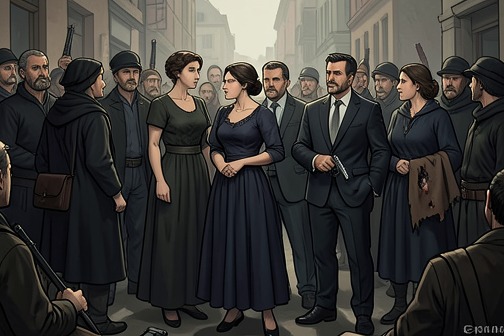
[The assassination of Felicia Gonzales](entity:event-recall-event-the-assassination-of-fe-093dbb1513f1) is a future political killing that links an apparently specific act of violence to the much slower catastrophe known as the Jackpot. In [Wilf Netherton](entity:character-recall-character-wilf-netherton-53b99127730d)’s future history, Vice President [Wally Ambrose](entity:character-recall-character-wally-ambrose-b441f6f8bfbc) kills Gonzales after she has been elected to a second term; [Ainsley Lowbeer](entity:character-recall-character-ainsley-lowbeer-41b557365a63) identifies the assassination as a pivotal turn toward deeper collapse. In [Flynne Fisher](entity:character-recall-character-flynne-fisher-554d3bcb279f)’s still-diverging timeline, it has not happened yet, making its prevention a consequential, though uncertain, objective.
## Historical Role and Political Stakes
Gonzales’s assassination is disclosed to [Flynne](entity:character-recall-character-flynne-2b508811bbfe) through Wilf’s account of [Lowbeer](entity:character-recall-character-lowbeer-e57df8106927)’s understanding of the history connecting their worlds. Gonzales does not finish her second presidential term: she is elected again, and her vice president, Wally Ambrose, kills her. The revelation changes the meaning of the future Wilf has been describing. [The Jackpot](entity:event-recall-event-the-jackpot-0933356c7c71) is not simply an environmental and social breakdown already gathering force; in Lowbeer’s analysis, this particular political murder marks a tipping point into its deeper phase.
The identity of the killer also makes the event more than a generalized warning about political instability. Ambrose is not an outside attacker but the vice president, a figure already situated at the center of the government whose president is killed. The evidence does not specify the method, immediate circumstances, or public response to the assassination, so its significance rests on the disclosed perpetrator and the historical consequences Lowbeer assigns to it rather than on a narrated scene of the killing.
## The Assassination and the Jackpot
Wilf’s explanation places the assassination within a catastrophe that is multicausal and extended over time, not a single apocalypse with a clear beginning. He describes the Jackpot as more like a climate than an event: human-caused pressures accumulate, interact, and produce cascading losses. Climate change drives further crises, while drought, water shortages, crop failures, the loss of honeybees and other keystone species, the disappearance of alpha predators, declining antibiotic effectiveness, and serious diseases combine without forming one defining disaster.
The eventual scale of the collapse is immense: Wilf says that roughly 80 percent of the living population dies over about forty years. Yet the disaster is not presented as uninterrupted decline. Scientific advances—including cleaner energy, improved carbon removal, new drugs, nanotechnology, and food-printing methods—arrive amid worsening conditions. The resulting contrast is central to his account: technological progress continues, but it does not prevent ongoing violence and suffering. Lowbeer’s designation of Gonzales’s assassination as a tipping point therefore gives a discrete political event a place within a far larger history of cumulative, systemic crisis.
That crisis also has unequal consequences. Wilf explains that the richest can become richer as the population falls and remaining assets concentrate, while constant emergency creates new opportunities for those able to exploit it. In the later world, towers serve both as housing for the wealthy and as structures that absorb carbon. The assassination is thus connected to a future whose political violence and environmental ruin do not distribute harm or advantage evenly.
## Prevention in the Diverging Timeline
When Wilf tells Flynne about the assassination, it is still in the future of her timeline. He explains that the two continuities have diverged and will continue to do so; the divergence can be steered only broadly, with no guarantee of the eventual result. Lowbeer hopes to ameliorate the Jackpot, not to claim that it can simply be erased. She and Wilf believe that preventing Gonzales’s assassination is a necessary step toward avoiding the system that has taken shape in Lowbeer’s world.
The proposed intervention remains constrained by incomplete knowledge. Wilf says he cannot know everything Lowbeer knows, and she cannot simply brief him on all of it. He acknowledges her greater experience and the possibility that a measure he would otherwise reject could be judged necessary in light of information unavailable to him. At the same time, he warns that actions by [Coldiron](entity:organization-recall-organization-coldiron-81ed5709264a) and its competitor could affect the assassination’s outcome by crashing the global economy, itself a danger. The effort to alter history therefore unfolds under uncertainty: intervention may change a pivotal outcome, but it may also produce serious consequences of its own.
## Conspiratorial Connections and Narrative Significance
A later account of [Aelita West’s murder](entity:event-recall-event-aelita-west-s-murder-57274236d40e) supplies a further, carefully qualified connection to the assassination’s political history. Lowbeer says that [Aelita](entity:character-recall-character-aelita-242d2c280053)’s father was a co-conspirator in the Gonzales assassination and expects [Griff](entity:character-recall-character-griff-f9d8fca071c8) to deal with him in that capacity. The evidence does not establish that Aelita’s murder was caused by the assassination plot, nor does it resolve why she was killed. It instead places the same political conspiracy in the background of the investigation into her death, showing how the consequences of the event reach beyond the presidential killing itself.
The narrative gives the assassination weight before staging it: it is disclosed as a fact of another timeline, then becomes a possible turning point in Flynne’s. Its importance lies in the tension between a slow, diffuse disaster and a sharply identifiable act of political violence. The Jackpot has no single origin, yet Lowbeer’s account isolates Gonzales’s murder as a moment at which history might still be steered. That distinction keeps prevention from becoming a promise of rescue: the assassination can be opposed, but the broader catastrophe is already underway, and its eventual course remains uncertain.